
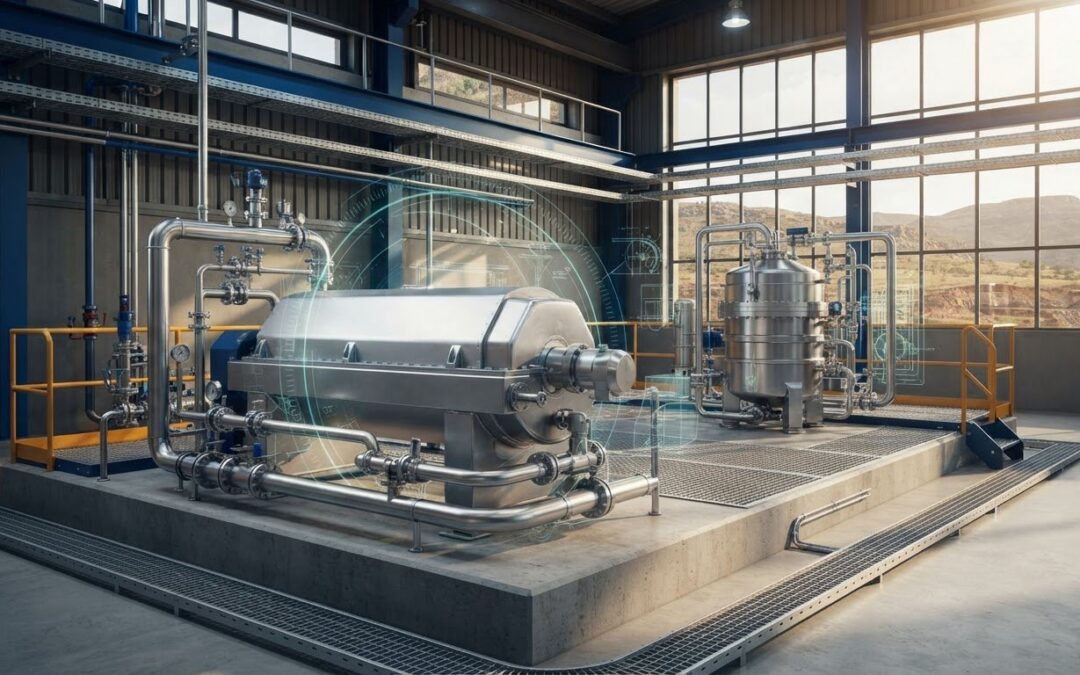
The machine with the highest advertised throughput may be the wrong choice for your plant. Choosing efficient solids recovery equipment means looking beyond headline figures to how a separator handles your feed, recovery target and operating conditions. A mismatch can affect product quality, downstream processes and reliability.
Equipment claims can be difficult to compare because different separation technologies suit different feed conditions and objectives. A figure that looks impressive in isolation may not reflect performance in your process. Start by defining what the equipment must achieve, then assess options against relevant operating criteria.
This guide compares equipment categories, including decanter centrifuges and disk stack separators, and explains what process information to gather before requesting a solution. You’ll learn how to assess throughput, solids capture, cake dryness, liquid clarity and operating stability, then use those measures to inform selection. The guidance applies to industrial separation in areas such as mining and food and beverage processing, where the equipment must suit both the feed and the recovery objective.
Key Takeaways
- Define whether your priority is recovering valuable solids, clarifying liquid, reducing waste volume or balancing several goals.
- Understand how decanter centrifuges and disk stack separators differ, then assess which category may suit your feed and separation objective.
- Evaluate efficient solids recovery equipment against process-fit criteria, not headline performance claims alone.
- Prepare useful selection information, including expected flow, operating schedule and likely feed variation.
- Consider whether equipment customisation or refurbishment of an existing centrifuge could inform a practical separation solution.
What efficient solids recovery equipment does in an industrial process
Efficient solids recovery equipment separates and captures solid material from a process stream to support a defined process outcome. The recovered material may have value, or the priority may be removing solids from a liquid, reducing the volume of material for handling, or achieving several of these aims together. There is no single universal measure of efficiency. It depends on the feed, the target and the conditions under which the equipment operates.
That distinction matters when selecting equipment. A system designed mainly to collect solids may not deliver the liquid clarity or dewatering result a plant needs. Likewise, recovering the greatest volume of solids is not necessarily the best outcome if material quality, moisture content or suitability for further use matters.
Which process outcomes should equipment support?
Solids capture describes how much solid material is separated from the incoming stream. Liquid clarification focuses on the suspended solids remaining in the liquid after separation. Dewatering aims to remove liquid from the captured solids, producing a more concentrated material. These outcomes are related, but prioritising one can affect the others.
For example, a mining tailings application may focus on dewatering and the handling characteristics of the recovered solids. In food processing, the objective could be recovering a useful solid fraction or clarifying a process liquid. Product quality and the nature of the material help define the target in either case. Assess each feed and required outcome on its own rather than assuming that requirements transfer between industries.
What does efficiency mean beyond throughput?
Throughput indicates how much feed the equipment processes over a period, but it does not show whether the separation meets the process need. Depending on the application, assessment may also consider:
- Solids recovery: the share of incoming solids captured in the separated solids stream.
- Cake dryness: the amount of liquid left in the dewatered solids, where dewatering is a goal.
- Liquid clarity: the suspended solids remaining in the clarified liquid, where liquid quality matters.
- Process uptime: how consistently the equipment can operate within the site’s operating requirements.
These measures can involve trade-offs, so select criteria that match the process goal and site requirements. For a fundamental explanation of how centrifugal force separates materials, see the overview of centrifuges. Verify any numerical performance benchmark for the specific feed, equipment configuration and operating conditions rather than treating it as a universal standard.
How centrifugal solids recovery separates process materials
Centrifugal equipment uses rotation to create a force that encourages components in a process stream to separate according to their density. As material moves through the machine, denser solids tend to migrate outwards relative to the liquid. Equipment design determines how the separated phases are collected and how the machine handles its separation duty.
Decanter centrifuges and disk stack separators are distinct equipment categories supplied by Sacor Engineering. Neither is right for every feed. Solids concentration, particle characteristics, flow rate and the required condition of the separated solids and liquid all affect the duty. Choose centrifugal equipment to suit both the material being processed and the result the process needs.
How a decanter centrifuge handles solids-bearing feed
In a decanter centrifuge, process material enters a rotating bowl, where centrifugal force separates solids from liquid. A scroll inside the bowl moves the separated solids towards a discharge point, allowing solid-liquid separation to continue as feed passes through the machine. The liquid leaves separately.
Performance depends on the feed, equipment and operating conditions. Changes in feed consistency or solids concentration can affect how the machine handles the material. Particle size and behaviour influence separation, while the required throughput helps define the duty the system must manage. For a closer look at selection factors, consult a dedicated guide to decanter centrifuge selection criteria.
Where disk stack separators may fit
Disk stack separators use a rotating bowl containing a stack of discs to support centrifugal separation. They may suit duties involving a liquid stream with solids to separate, but suitability depends on the material and required outcome. Assess feed characteristics and operating conditions rather than assuming a particular result from the equipment category alone.
A process with a relatively low solids load and a liquid clarification objective may require different considerations from a solids-heavy feed that needs dewatering. This distinction can help narrow the options, but the specific application still needs assessment. A guide to high-speed disk stack separators can provide more technology-specific detail.
Comparing equipment against the actual process duty is a practical starting point for identifying efficient solids recovery equipment. Sacor Engineering supplies and customises decanter centrifuges and centrifugal separators for industrial separation applications. To explore equipment categories and tailored separation solutions, visit Sacor Engineering’s separation equipment information.
Compare solids recovery equipment by process fit, not headline claims
Start a useful comparison with the separation duty, not a single throughput figure or performance claim. Consider what each option is intended to separate, the nature of the feed, the operating context and the evidence needed to confirm suitability. The categories below are starting points for evaluation, not a substitute for an application-specific engineering review.
| Equipment category | Possible separation objective | Feed and operating considerations | Information to assess |
|---|---|---|---|
| Decanter centrifuge | Separate solids from liquid, including duties involving solids handling or dewatering. | Solids concentration, particle characteristics, feed variation and required throughput. | Feed composition, flow range, target solids condition and operating schedule. |
| Disk stack separator | Separate components in a centrifugal separation duty, according to the material and process target. | Liquid properties, solids load, particle behaviour and the required separation result. | Solids content, liquid characteristics, desired product or liquid quality and process conditions. |
| Filter-based or other process option | May be considered where the process objective and material are suited to that separation approach. | Feed behaviour, separation stages, handling requirements and integration with the wider process. | Required separation outcome, feed data, operating constraints and the basis for comparison. |
Filter-based methods are included here only as a comparison category. The table does not establish a universal winner: suitability depends on the actual feed, separation target and site requirements. An engineer should verify technical limits and process-specific recommendations against the intended application. Comparing efficient solids recovery equipment using consistent criteria helps distinguish process fit from claims that may not reflect operating conditions.
Which feed characteristics change the equipment decision?
Before comparing options, record the solids concentration and particle size distribution, and note how both vary over time. Include liquid properties and any changes in temperature or composition that could affect the process. Describe the required condition of the recovered solids, including whether a drier material is a priority, as well as the desired liquid quality. Treat operating limits and equipment recommendations as matters for engineering verification, not assumptions based on a broad equipment description.
How do mining and food processing priorities differ?
For mining tailings, the assessment may centre on solids recovery, dewatering, water handling and the management of remaining material. In food and beverage processing, the objective may be recovering a product fraction or achieving a required process-liquid quality. Product characteristics and process conditions matter in both cases, but priorities are not interchangeable. Define the outcome for the specific duty, then compare options against it without assuming savings, compliance results or guaranteed performance.

A practical checklist for specifying solids recovery equipment
A clear specification gives an equipment supplier a practical basis for assessing process fit. Work through these steps before requesting a solution, and record assumptions as well as known operating data.
- 1. Define the goal. State whether the priority is capturing solids, clarifying liquid, dewatering, recovering a useful material or balancing more than one outcome.
- 2. Characterise the feed. Gather representative samples and available data on solids concentration, particle characteristics, liquid properties and how these vary during operation.
- 3. Set operating needs. Record expected flow, operating schedule, normal and peak conditions, and known changes in feed. Include space constraints, maintenance access, operator requirements and how equipment must integrate with the existing process.
- 4. Assess the options. Compare equipment categories against the defined duty, feed and site conditions. For an upgrade or replacement, include details of existing equipment and the issues the new or refurbished system must address.
- 5. Validate the choice. Agree on the measures that will define success, then check whether the assessment or test conditions reflect the intended process and its operating range.
What process information should a supplier receive?
Where practical, share representative feed samples alongside process data and a precise description of the required separation outcome. Explain expected flow and operating patterns, including variability in feed composition or solids loading. If assessing an existing installation, provide equipment details and relevant operating history. Describe site constraints and how the proposed system needs to connect with the current process. This context helps distinguish a genuine process requirement from an assumption.
How should performance be assessed before selection?
Agree on measurable indicators that match the application. Depending on the process goal, these could include solids captured, the condition of dewatered solids, liquid clarity, throughput or operating continuity. Ask how test conditions relate to your feed, expected flow and likely operating range. Do not treat a result from different conditions as a prediction for your plant. Application-specific limits and recommendations need engineering review. For mining applications, the tailings dewatering equipment guide offers further context on that duty.
Preparing this information makes a technical discussion more focused. Sacor Engineering supplies and customises separation equipment and can assess process requirements in relation to suitable equipment categories, including existing centrifuges. Discuss your solids recovery requirements with Sacor Engineering.
How Sacor Engineering can support a solids recovery solution
Selecting efficient solids recovery equipment is an engineering decision grounded in the process, not simply a choice between machine types. Sacor Engineering supplies and customises decanter centrifuges, centrifugal separators and disk stack separators for industrial separation applications. An application assessment connects process requirements, feed conditions and recovery objectives with an appropriate equipment category.
This review can help clarify what the equipment needs to handle and what the separation should achieve. The information gathered may point towards a new or customised system, or prompt a closer assessment of machinery already in operation. Confirm any proposed configuration or outcome for the specific application.
When should a new or customised solution be assessed?
Consider an equipment review if the process objective has changed, feed conditions vary or existing equipment no longer aligns with operating requirements. A change in flow, solids characteristics or the desired quality of the separated material may also affect which equipment category merits assessment.
Customisation provides a way to evaluate process requirements against an equipment solution. It is not a promise that a particular design will achieve a specified result. Share the intended duty, process data and site constraints so they can be considered together. For broader engineering context, see the guide to customised industrial separation solutions.
When might centrifuge refurbishment be worth exploring?
For an existing centrifuge, refurbishment may be worth considering alongside replacement or new equipment assessment. Start by reviewing the machine’s condition, its current process performance and the operating requirements it must meet. Equipment type, process duty and observed issues can provide a useful basis for evaluation.
Sacor Engineering provides industrial centrifuge refurbishment and maintenance services. Whether refurbishment is appropriate depends on the particular machine and application. Do not assume it will extend service life or deliver a specific performance improvement. A technical assessment can help establish which route merits further consideration.
To begin a focused discussion, prepare your process objective, feed information, operating conditions and any relevant details about existing centrifuge equipment. Contact Sacor Engineering to discuss your solids recovery requirements and the equipment options that may suit your application.
Make your next separation decision with confidence
Effective solids recovery starts with a clear process objective. Define whether the priority is capturing solids, clarifying liquid, dewatering or combining outcomes, then assess the feed, operating conditions and site requirements against that goal. Throughput alone will not show whether a solution fits.
Comparing equipment categories against consistent, measurable criteria makes selection more practical. Record expected flow, feed variability and the required condition of the recovered solids or separated liquid. These details support an application-specific assessment instead of a decision based on a headline claim.
Sacor Engineering supplies and customises industrial centrifuges and centrifugal separators, and provides tailings dewatering equipment and centrifuge refurbishment services. A discussion can help assess whether a new or customised system, or a review of existing machinery, is the appropriate route for your process.
To explore efficient solids recovery equipment suited to your application, discuss your solids recovery requirements with Sacor Engineering. Clear process information gives the technical discussion a practical starting point.
Frequently Asked Questions
Is a decanter centrifuge suitable for every solids recovery application?
No. A decanter centrifuge is not suitable for every solids recovery application. Its fit depends on the feed’s solids concentration, particle characteristics, flow and variability, as well as whether the priority is solids capture, liquid clarification or dewatering. Operating conditions and site requirements also matter. Compare these factors with the required outcome through an application-specific assessment; a machine suited to one duty may not fit another.
How do I measure solids recovery equipment efficiency?
Measure efficiency against the process objective, not a universal benchmark. Relevant indicators may include the proportion of solids captured, the dryness of dewatered solids, the solids remaining in the liquid, throughput and operating continuity. Assessing efficient solids recovery equipment also means checking that results are measured under conditions representative of your feed and operating range. Agree which indicators matter most for your application, and verify any numerical targets for that specific duty.
What information is needed to select solids recovery equipment?
Provide information about the feed, process objective and operating context. Useful details include solids concentration, particle characteristics, liquid properties, expected flow and how feed conditions vary. State whether you need to recover solids, clarify liquid, dewater material or meet several objectives. Also share the operating schedule, site constraints and details of existing equipment if considering an upgrade or replacement. Representative samples and process data can support a more informed application assessment.
Can centrifugal separators recover fine solids from process liquids?
They may suit some duties involving fine solids, but suitability depends on the material and separation objective. Particle characteristics, solids loading, liquid properties and operating conditions all influence what a centrifugal separator can achieve in a particular process. Define the required liquid quality or solids recovery outcome, then have the feed and duty assessed against the equipment category. Do not assume a separator will meet a specific target without an application-specific review.
What is the difference between a decanter centrifuge and a disk stack separator?
A decanter centrifuge uses a rotating bowl and internal scroll to separate solids from liquid and convey captured solids towards discharge. A disk stack separator uses a stack of discs within a rotating bowl to support centrifugal separation. These are different equipment designs, not interchangeable labels. The more suitable category depends on the feed, solids load, required separation result and operating conditions, so final selection should follow a process-specific review.
Can an existing industrial centrifuge be refurbished instead of replaced?
Possibly. Whether refurbishment is appropriate depends on the centrifuge’s condition, its current performance in the process and the operating requirements it needs to meet. Review equipment details, operating history and observed issues before comparing refurbishment with replacement or a new system. Sacor Engineering provides industrial centrifuge refurbishment and maintenance services. An assessment can establish whether refurbishment merits consideration, but suitability and any expected outcome must be determined for the particular machine.
Which industries use solids recovery equipment?
Solids recovery equipment is used in industrial processes where solids and liquids need to be separated. Sacor Engineering’s applications include mining, particularly tailings dewatering, and food and beverage processing. The objectives differ: a mining duty may focus on dewatering tailings and handling process water, while a food process may prioritise recovering a material fraction or separating process liquids. Select equipment to suit each feed, process objective and operating requirement.