

What if a small change in vibration or operating behaviour were the first sign of a costly stoppage? Unplanned downtime can disrupt production and leave maintenance teams reacting under pressure. A condition-led preventative maintenance checklist for decanter centrifuges helps turn routine observations into timely, informed action.
Inspection routines are most useful when they reflect the machine, process and manufacturer’s instructions, rather than relying on a generic schedule. Consistent checks also help operators distinguish normal variation from changes that need recording, monitoring or engineering assessment.
This guide sets out a practical approach to inspecting key areas, recording operating conditions and recognising warning signs such as unusual noise, vibration, leakage or visible wear. You’ll learn how to organise checks around the relevant manual, escalate abnormal findings and use records across shifts to plan maintenance and refurbishment with greater confidence. The aim is a repeatable routine that supports reliable operation across South African industrial applications.
Key Takeaways
- Connect decanter availability and separation performance to planned inspections, so developing issues inform maintenance decisions.
- Assess the bowl and scroll, drive and gearbox, bearings, feed system and discharge points for changes in operating condition.
- Set checklist intervals according to site conditions and the manufacturer’s instructions.
- Follow site procedures and machine-specific safety instructions, with approved isolation and safe access in place before hands-on inspection.
- Use recurring findings and complete maintenance records to prioritise engineering assessment, maintenance work or refurbishment.
Why a Preventative Maintenance Checklist for Decanter Centrifuges Matters
A decanter centrifuge can remain in service while its condition gradually changes. Without consistent observations, developing wear or a shift in process behaviour may go unrecorded until it affects separation performance or requires an unplanned intervention. Planned inspections help teams identify changes earlier, assess their significance and organise maintenance before a minor finding becomes a larger operational problem.
Availability and separation performance are closely connected. Changes in feed conditions, machine behaviour or component condition can affect how reliably the centrifuge operates and the quality of separation. A structured preventative maintenance checklist for decanter centrifuges gives operators and maintenance teams a shared way to capture observations and decide what needs attention.
The checklist is a practical aid, not a replacement for the equipment’s original equipment manufacturer (OEM) manual. The manual remains the reference for machine-specific inspection instructions, tolerances, lubrication requirements and service guidance. Inspection frequency depends on that guidance, the machine’s duty and site conditions, so a universal timetable may be unsuitable.
What does preventative maintenance mean for a decanter centrifuge?
Preventative maintenance combines routine operator observations with planned technical inspections and, where required, corrective work. Operators may note changes in noise, vibration, leakage or process behaviour during operation. Technical inspections assess equipment condition in greater detail, while corrective work addresses identified defects. Each activity has a different purpose, but together they support informed maintenance decisions.
The bowl and scroll form an integrated rotating assembly. Their interaction is central to conveying solids and achieving separation, so a change in performance or machine behaviour may warrant assessment of the assembly rather than an isolated component. For background on the operating principle and main components, see the Decanter Centrifuge Wikipedia overview.
Condition-based maintenance uses observed performance and inspection findings to guide action. Rather than treating every machine as if it needs identical work at fixed intervals, teams can record changes, compare them with normal operation and escalate findings in line with OEM guidance and site procedures.
What should a good decanter maintenance checklist achieve?
A useful checklist makes observations repeatable across operators, shifts and maintenance periods. It should capture normal conditions as well as abnormalities, so later reviews can show whether a change is isolated, recurring or worsening.
It should also support clear prioritisation. Assess findings according to safety, effect on process performance and potential implications for equipment condition. The checklist should prompt escalation when conditions are abnormal, persistent or unclear, rather than prescribe universal service intervals. Complete records give maintenance teams a sounder basis for planning inspections, engineering assessment and refurbishment work.
Decanter Centrifuge Components and Warning Signs to Inspect
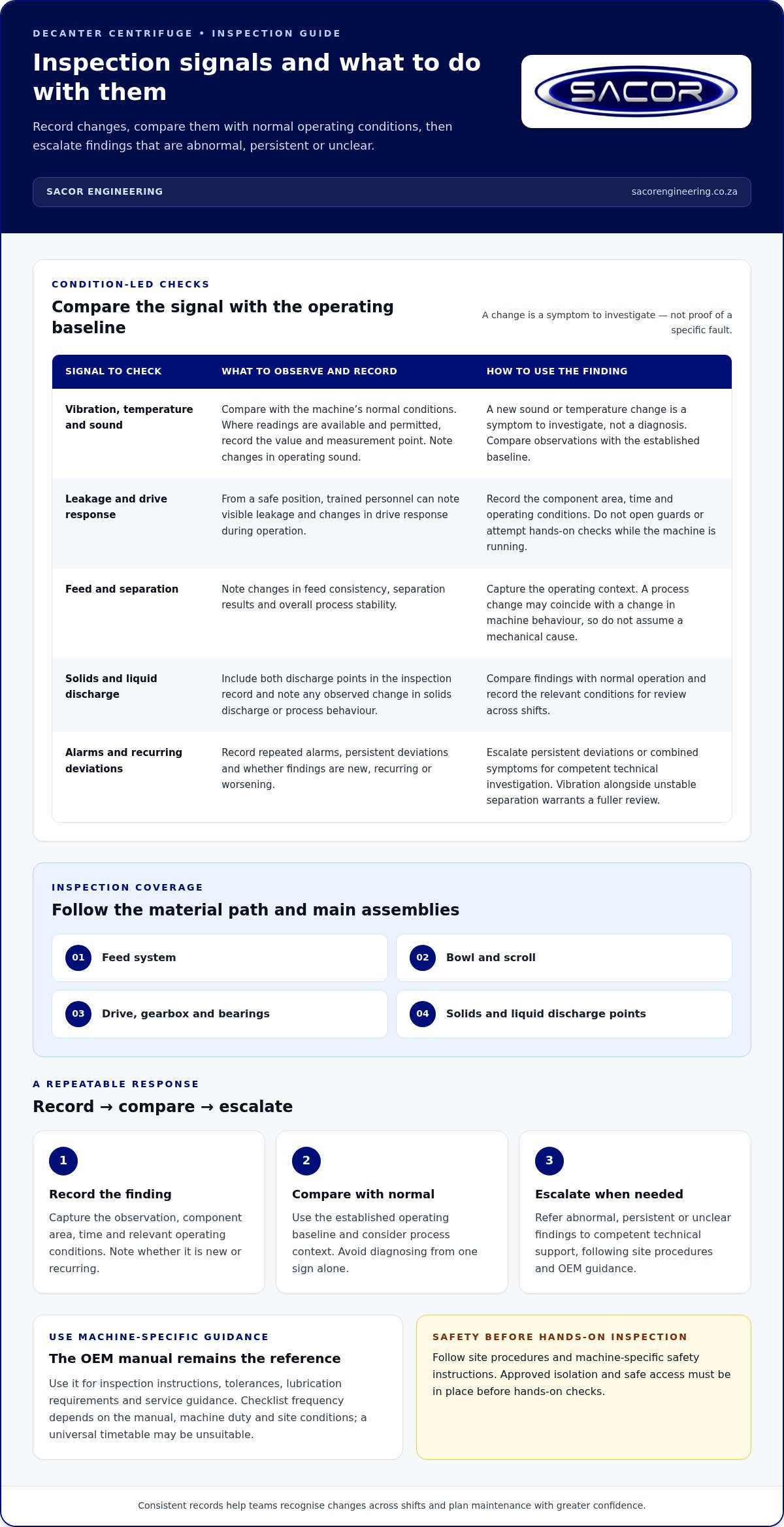
A useful inspection follows the material path and the machine’s main assemblies, from the feed system through the rotating bowl and scroll to the discharge points. Record what can be observed safely, then compare it with the centrifuge’s established operating baseline. A new noise or temperature change is a symptom to investigate, not proof of a specific fault. Avoid diagnosing from one sign alone.
Which rotating and drive components need attention?
Include the bowl and scroll, drive and gearbox, bearings, feed system, and solids and liquid discharge points in the inspection record. Check accessible areas only under approved isolation and access procedures. During operation, trained personnel can note changes in sound, vibration, drive response or visible leakage from a safe position. Do not open guards or attempt hands-on checks while the machine is running.
For each observation, record the component area, time, operating conditions and whether the finding is new or recurring. The OEM documentation governs component-specific clearances, lubrication requirements and wear limits. A checklist can flag a change for assessment, but it should not substitute generic values for machine-specific instructions.
Which process and condition signals can reveal a developing issue?
Compare vibration, temperature and operating sound with the machine’s normal conditions. Where readings are available and their collection is permitted by site procedures, record the value and measurement point. Also note changes in feed consistency, separation results, solids discharge and overall process stability. A shift in one area may coincide with a process change, so capture the operating context rather than assuming a mechanical cause.
Repeated alarms, persistent deviations or a combination of symptoms should be escalated for competent technical investigation. For example, a change in vibration alongside unstable separation warrants a fuller review than either observation on its own. Use the preventative maintenance checklist for decanter centrifuges to make findings visible across shifts, not to label a component as faulty without evidence.
- Record: the observation, location, time and relevant operating conditions.
- Compare: the finding with the machine’s established baseline and previous records.
- Escalate: recurring or worsening changes in line with site procedures and OEM guidance.
Consistent records help maintenance teams distinguish a one-off variation from a developing pattern and plan an appropriate response. For recurring findings that require engineering assessment, Sacor Engineering’s centrifuge maintenance and refurbishment support can inform the next maintenance decision.
A Practical Decanter Centrifuge Maintenance Checklist by Frequency
Use this checklist as a framework, then set its timing around the machine’s OEM schedule, process duty, operating history and site conditions. “Routine operation” and “planned inspection” describe different types of checks, not universal daily or monthly intervals. Confirm frequencies and technical requirements in the relevant manufacturer’s instructions, and adapt the routine when operating conditions or inspection findings change.
What should operators check during routine operation?
Operators should observe the machine from approved positions and record changes from its established normal behaviour. Capture relevant process conditions alongside equipment status, so later reviews can distinguish a machine change from a change in duty. Don’t attempt hands-on inspection while the centrifuge is operating. Route safety concerns and significant deviations through established site procedures.
What belongs in planned inspections and maintenance records?
Use the OEM schedule to plan competent inspections of lubrication, drives, wear areas and protective devices. Record completed work, parts replaced, findings and follow-up actions. Review records across maintenance periods to identify recurring observations that merit technical assessment. Inspection and service intervals depend on the site and OEM guidance.
The table provides a copyable starting point. Add equipment-specific checks and assign responsibilities in line with your site procedures.
| Task | Observation | Record | Escalation |
|---|---|---|---|
| Routine operating observation | Abnormal sound, vibration, leakage, alarms or visible change from normal operation | Time, equipment status, process conditions and what changed | Report safety concerns or significant deviations through site procedures |
| Planned technical inspection | Condition of lubrication, drives, wear areas and protective devices, as specified by the OEM | Inspection findings, work completed, parts replaced and any limitations | Refer abnormal findings for competent technical review |
| Maintenance-record review | Repeated findings, outstanding follow-up actions, or changes across inspection periods | Trend, action owner and status of follow-up work | Escalate recurring or worsening patterns for engineering assessment |
Keep the preventative maintenance checklist for decanter centrifuges consistent enough for different shifts to use, while tailoring its content to the machine and process. A change in process duty may affect which operating observations are most useful, but it doesn’t override the OEM’s inspection requirements. Equipment-specific limits and maintenance tasks should come from the relevant manual, not an assumed industry-wide interval.
Close each record with a clear outcome: no action required, monitor, schedule planned work, or escalate for assessment. This makes handovers more reliable and helps maintenance teams distinguish a completed check from an unresolved finding. Review the checklist when operating history, process conditions or technical findings indicate that its focus needs adjustment.
Safe Decanter Inspection and Handling Abnormal Conditions
A checklist is only useful when each task can be carried out safely. Before inspecting a decanter centrifuge, follow site procedures, use competent personnel and consult the machine-specific safety instructions. The safe method depends on the task: an observation from an approved position during operation differs from an internal inspection or hands-on work.
How should teams prepare for an inspection?
Before work begins, review the relevant OEM manual, task risk controls and site isolation procedure. Confirm who is responsible, that access is authorised and that the protective measures required for the task are in place. If the inspection requires access to internal areas or contact with components, use the approved isolation process and verify safe access before proceeding. Never approach moving or energised equipment for a task that requires isolation.
Keep observation and reporting separate from intervention. Noting a sound or visible leak from a safe position does not authorise an operator to adjust settings, remove a guard or investigate inside the machine. Adjustments, repairs and invasive work must follow the approved work process and be assigned to competent personnel.
What should happen when the checklist identifies a warning sign?
Respond in a controlled sequence. First, record what was observed, when it occurred and the operating context, including any related alarm or process change. Then follow the site’s escalation procedure. Assess the finding safely before deciding what work is needed; don’t adjust settings based on an unverified diagnosis.
Compare the observation with previous records. A repeated or worsening deviation gives a stronger basis for technical review than an isolated note, but it still needs competent assessment to establish its significance. Escalate promptly in line with site procedures if the condition raises a safety concern or materially disrupts operation.
- Record: the symptom, time, equipment status and associated process conditions.
- Follow: site procedures for reporting and controlling abnormal conditions.
- Assess: arrange safe review by personnel competent for the inspection or work required.
- Review: compare repeat findings and assign follow-up actions with clear responsibility.
This disciplined response turns checklist entries into useful maintenance decisions without confusing an observed symptom with a confirmed cause. For recurring findings that need technical investigation, Sacor Engineering’s centrifuge maintenance support can help inform the next steps.
When Decanter Maintenance Findings Call for Specialist Engineering Support
A checklist helps teams spot changes, but it can’t establish the cause of every symptom. Repeated vibration, a worsening shift in separation performance or recurring findings on the same component are reasons to seek a deeper engineering assessment. This is especially relevant when an observation persists after routine checks or when the machine’s behaviour no longer aligns with its established operating baseline.
When is a routine checklist no longer enough?
Escalate findings when they recur, worsen or remain unresolved, and follow site procedures if they affect safe operation. Treat them as evidence that needs investigation, not proof that a particular component needs repair. A technical recommendation should reflect the centrifuge’s actual condition, operating history and application. The decanter centrifuge selection criteria guide provides context for considering how equipment suitability relates to process requirements.
Bring the maintenance record together before assessment. Useful details include when the change began, whether it has repeated, relevant operating and process conditions, alarms, inspections completed and work already carried out. This history helps distinguish a one-off observation from a developing pattern and gives the technical review a clearer starting point. The preventative maintenance checklist for decanter centrifuges supports this process by connecting observations to follow-up actions, without substituting for an engineering diagnosis.
How can engineering support improve maintenance planning?
Technical assessment can help teams determine which findings need further investigation and how to prioritise work. For an existing industrial centrifuge, refurbishment expertise can inform longer-term planning where condition records point to recurring concerns. Refurbishment is not automatically required: the appropriate recommendation depends on assessment of the machine and its application. For more on this planning consideration, read industrial centrifuge life extension through refurbishment.
Before a technical discussion, organise records by component or finding and note outstanding actions. Include relevant process changes and explain what has already been observed, rather than presenting an unverified cause as fact. Clear documentation helps focus assessment on the machine’s condition and operational needs, supporting better-informed maintenance priorities.
For recurring findings that need engineering assessment, Sacor Engineering’s decanter centrifuge maintenance support can help inform practical next steps for industrial separation equipment.
Turn Inspection Findings Into Better-Planned Maintenance
A reliable maintenance routine is built around the machine, its operating duty and the manufacturer’s instructions. Use a preventative maintenance checklist for decanter centrifuges to make observations consistent, record changes against the established operating baseline and identify findings that need follow-up. The checklist supports good decisions, but it doesn’t replace the OEM manual or competent technical assessment.
Pay attention to recurring vibration, unusual noise, leakage and changes in separation performance. Record the operating context, follow site safety procedures and escalate persistent or worsening conditions rather than assuming a cause. Over time, clear records help maintenance teams understand trends, prioritise work and plan appropriate inspections or refurbishment.
Sacor Engineering provides industrial centrifuge maintenance and refurbishment services, including technical work on decanter centrifuges and customised separation solutions. Discuss your decanter centrifuge maintenance requirements with Sacor Engineering to explore practical next steps for your equipment and application. A repeatable routine and the right technical input help your team approach maintenance planning with greater confidence.
Frequently Asked Questions
How often should a decanter centrifuge be maintained?
Follow the inspection and maintenance intervals in the relevant manufacturer’s manual, then adapt the routine to the machine’s duty, operating history and site conditions. There isn’t one frequency that suits every decanter. Separate routine operating observations from planned technical inspections, and review records for changes that may justify earlier assessment. Check equipment-specific servicing requirements, lubrication instructions and limits against the OEM guidance.
What should be included in a decanter centrifuge maintenance checklist?
A useful preventative maintenance checklist for decanter centrifuges covers the bowl and scroll, drive and gearbox, bearings, feed system and discharge points. Include operating observations such as sound, vibration, leakage, alarms and process performance, alongside equipment status and relevant operating conditions. Provide space to record inspection findings, completed work, parts replaced, follow-up actions and escalation. Base technical tasks and intervals on the machine’s OEM instructions.
What are common signs that a decanter centrifuge needs attention?
Changes in operating sound, vibration, temperature, leakage, alarms or separation results can indicate that a decanter needs attention. Process instability, altered feed behaviour or changes at the solids discharge may also warrant investigation. Compare each observation with the machine’s established baseline and note when it occurred and under what operating conditions. These are warning signs, not confirmed diagnoses; a single symptom shouldn’t be used to identify a specific fault.
Can a decanter centrifuge be inspected while it is running?
Only make observations permitted by site procedures and the machine’s safety instructions during operation. Personnel may record visible changes or operating sounds from an approved safe position, with guards in place. Don’t open guards or carry out hands-on or internal inspection while the machine is running. Tasks that require access or contact with components need the approved isolation procedure and verification of safe access before work begins.
What causes vibration in a decanter centrifuge?
Vibration can have several possible causes, including a change in rotating assembly condition, wear, material build-up, drive or bearing issues, or variation in the process. These possibilities aren’t a diagnosis. Record when vibration occurs, whether it changes with operating conditions, and whether it coincides with alarms, unusual noise or altered separation performance. Repeated or worsening vibration should be escalated for competent technical assessment, following site procedures and OEM guidance.
Does every decanter centrifuge use the same maintenance schedule?
No. Maintenance requirements depend on the specific machine, its manufacturer’s guidance, process duty, operating history and site conditions. A schedule developed for one centrifuge may not suit another, even if both perform similar duties. Use the OEM manual for equipment-specific tasks, limits and intervals, then organise site checks around actual conditions and recorded findings. Review the routine when the application changes or recurring observations point to a need for assessment.
When should a decanter centrifuge be refurbished rather than routinely maintained?
Consider a refurbishment assessment when recurring component findings, persistent performance changes or maintenance history suggest that routine tasks may no longer address the equipment’s condition. These observations don’t automatically mean refurbishment is required. A technical assessment should consider the machine, its operating history and application before recommending maintenance, repair or refurbishment. Complete records of findings and work performed help clarify priorities and support informed planning for the centrifuge’s continued service.