
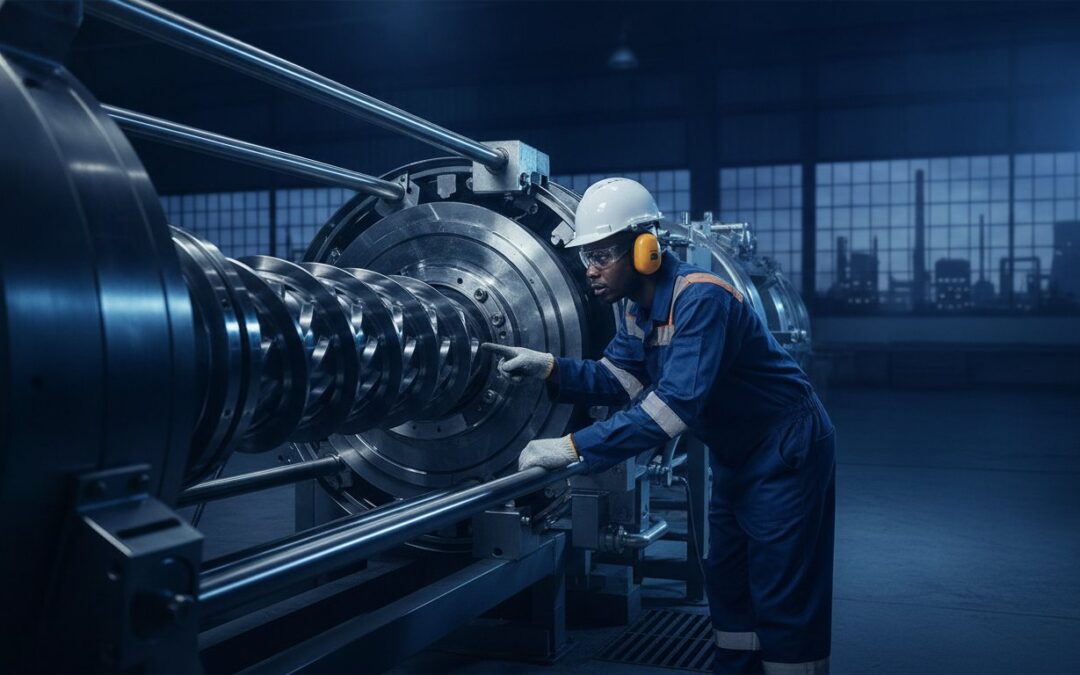
Could the cost of a single hour of unplanned downtime actually outweigh your entire annual service budget? In the high-stakes world of industrial processing, a minor vibration in a decanter centrifuge often signals a looming financial catastrophe. You likely recognise that consistent, high-performance output depends on the structural integrity of your hardware, yet achieving effective separation machinery maintenance remains a complex challenge. The struggle isn’t just about the high price of emergency repairs; it’s the loss of separation efficiency that leads to product contamination and a significantly shortened equipment lifespan.
This guide empowers you to master the technical protocols and preventative strategies required to optimise performance and extend the life of your industrial separation equipment. We’ll examine the specific engineering standards and refurbishment cycles necessary to achieve zero unplanned downtime whilst ensuring total safety compliance. By the end of this professional brief, you’ll have a clear roadmap to transform your maintenance from a reactive expense into a predictable driver of industrial longevity through 2026 and beyond.
Key Takeaways
- Identify the mechanical impact of centrifugal force on structural fatigue to prevent catastrophic failure in high-speed components.
- Learn to execute essential separation machinery maintenance protocols, including precise lubrication of conveyor bearings and thorough bowl surface inspections.
- Recognise the critical “point of no return” where routine operator checks must be replaced by professional technical refurbishment to restore optimal performance.
- Build a robust maintenance schedule that integrates condition-based monitoring to eliminate unplanned downtime and stabilise operational budgets.
- Discover how partnering with specialised engineering experts can restore your industrial separators to original OEM standards and maximise their total lifespan.
The Critical Importance of Separation Machinery Maintenance in Industrial Workflows
Separation machinery maintenance represents the systematic preservation of high-speed centrifugal components. It’s a precision engineering discipline designed to ensure every internal part, from the main bearings to the conveyor scroll, operates within strict OEM tolerances. In modern industrial workflows, these machines act as the final gatekeepers of product quality. If the centrifuge performance wavers, the entire production chain’s integrity is compromised, leading to sub-standard output that can ruin a brand’s reputation.
The mechanical stress inherent in industrial centrifuge technology is truly immense. High-speed rotation generates massive centrifugal forces that accelerate wear and structural fatigue in ways static machinery simply never experiences. This isn’t merely about friction; it’s about the long-term integrity of the rotating mass. Neglecting these forces leads to a direct loss of separation efficiency, which causes product contamination and costly process inconsistencies. From a safety perspective, a machine spinning at several thousand RPM holds incredible kinetic energy. Any failure in the structural housing or rotating assembly presents a severe risk to plant personnel and local infrastructure.
Why Separation Machinery Requires Specialised Care
Standard industrial motors are relatively simple compared to the high G-forces found in centrifugal separators. A minor imbalance in a decanter bowl, often caused by a few grams of uneven sediment, doesn’t just cause a slight hum. It creates exponential vibration damage that can eventually shatter housings or shear mounting bolts. You should establish a technical baseline using the professional guide to industrial separation solutions in 2026 to ensure your equipment operates within safe parameters. This specialised care is what separates a reliable operation from one plagued by constant nuisance trips and mechanical failures.
The Economic Impact of Proactive Maintenance
In heavy industries such as mining or large-scale food processing, the cost of unplanned downtime is often the difference between profit and loss. Proactive separation machinery maintenance stabilises these costs by identifying wear before it becomes a failure. Well-maintained, balanced bowls also offer significant energy efficiency gains. A balanced machine draws less current and runs cooler, which preserves the life of the motor and drive system. By prioritising proactive lubrication and regular inspections, you significantly reduce the consumption of expensive spare parts. This methodical approach ensures your maintenance budget is spent on prevention rather than expensive, high-pressure emergency fixes.
Core Maintenance Protocols for High-Performance Decanter Centrifuges
High-performance decanters operate under extreme mechanical conditions. Effective separation machinery maintenance relies heavily on a precision lubrication regime. Main bearings require high-temperature grease to withstand the thermal load of continuous rotation, whilst conveyor bearings need frequent attention to manage the high torque required for solids discharge. Neglecting these intervals leads to premature bearing fatigue and catastrophic mechanical seizure. It’s vital to follow the specific grease volumes recommended by the manufacturer; over-greasing can be just as damaging as under-lubrication by causing seal failure and internal heat build-up.
Seal integrity is equally critical for process stability. Lip seals and mechanical seals prevent process fluids from entering bearing housings and stop external contaminants from fouling your product. If you notice even a slight weep of oil or process liquid, it’s a clear signal that the seal has failed. Prompt replacement prevents the high cost of a full bearing rebuild. Monitoring gearbox oil levels and temperature fluctuations provides another layer of protection. A sudden spike in gearbox heat often indicates a failing internal gear or contaminated oil that has lost its viscosity.
Scroll and Bowl Inspection Techniques
In abrasive slurry applications, the scroll (conveyor) faces constant erosion. Inspecting the bowl and scroll surfaces for specific wear patterns helps you predict when a unit requires technical intervention. Use dye penetrant testing to uncover micro-cracks in the stainless steel bowl before they propagate under centrifugal stress. If your machine uses sintered tungsten carbide tiles, check for missing or chipped segments. These tiles are your primary defence against the erosive nature of tailings and mineral concentrates. Ensuring the hard-facing remains intact is the most effective way to preserve the structural integrity of the scroll.
Gearbox and Drive System Upkeep
The planetary gearbox is the heart of the differential speed control. Monitor its behaviour weekly under varying load conditions to ensure it maintains the correct torque output. Additionally, check drive belt tension and pulley alignment. Misaligned belts cause lateral loads on motor bearings, leading to unnecessary vibration and heat. Interpreting vibration analysis data allows you to identify specific frequencies associated with gear mesh or bearing defects before they lead to downtime. For complex drive issues, consulting the professional guide to industrial separation solutions in 2026 provides a technical baseline for restoring your drive system to its original specifications.
Refurbishment vs. Routine Maintenance: Extending Operational Life
Routine operator tasks are the first line of defence in separation machinery maintenance, but they cannot stop the inevitable progression of metallurgical fatigue and abrasive wear. Daily care focuses on lubrication, belt tension, and visual checks. In contrast, technical refurbishment involves stripping the machine to its core components to restore original OEM specifications. Understanding this distinction is vital for long-term asset management. Whilst routine maintenance keeps the machine running, refurbishment restores the precision required for peak efficiency.
Eventually, every industrial centrifuge reaches a “point of no return” where field adjustments no longer suffice. At this stage, persistent performance drops or excessive vibration indicate that internal tolerances have drifted beyond the reach of standard maintenance. Integrating industrial centrifuge life extension into your capital expenditure planning allows for predictable budgeting. It transforms an aging, inefficient asset into a high-performance machine without the prohibitive cost of total replacement, often providing a significantly higher return on investment than purchasing new hardware.
Signs Your Centrifuge Requires Professional Refurbishment
Operators must look for specific indicators that a unit needs more than a standard service. Persistent vibration that remains even after careful field balancing is a primary warning sign. It often suggests internal material loss or uneven wear on the bowl shell that requires precision engineering to correct. Similarly, if you observe a significant drop in cake dryness or liquid clarity despite fine-tuning the process parameters, the internal geometry of the scroll or bowl may be compromised. Visible erosion on the scroll flights or the bowl discharge ports indicates that the wear protection has reached the end of its functional life and requires immediate intervention.
The Refurbishment Process: From Strip-Down to Re-Commissioning
The process begins with specialised cleaning and decontamination to ensure all components are safe for engineering inspection. Precision machining follows, often involving the restoration of bearing housings to their original dimensions. This is critical because even a few microns of wear can lead to bearing instability at high speeds. Professional scroll re-tipping replaces worn tungsten carbide tiles or hard-facing, restoring the conveyor’s ability to move solids efficiently. The most vital phase is final dynamic balancing. This must be performed at full operational speeds to ensure the rotating assembly meets strict vibration standards, guaranteeing a smooth return to service and a maximised operational lifespan.
Developing a Preventative Maintenance Schedule for Separation Equipment
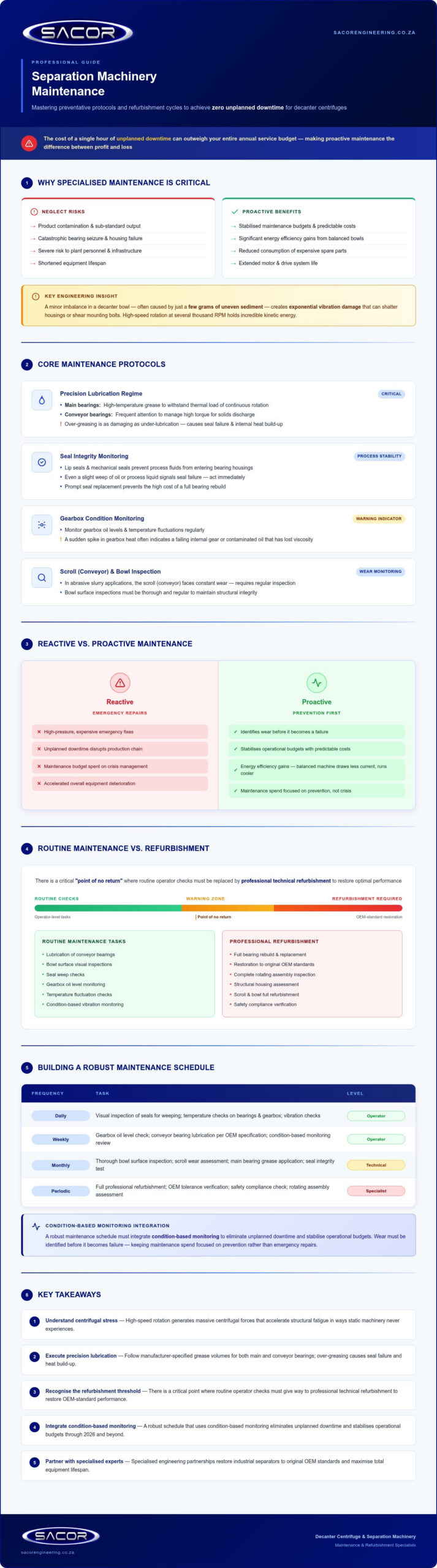
A structured approach to separation machinery maintenance ensures that every component receives attention before wear translates into failure. You should establish a tiered schedule that categorises tasks by frequency and technical complexity. This transition from reactive repairs to a disciplined preventative framework is essential for maintaining process yields. By integrating condition-based monitoring (CBM), you can move beyond rigid calendar dates and instead perform interventions based on real-time data such as vibration spikes or thermal deviations.
Daily and Weekly Operational Checks
Your plant operators should monitor vibration levels and bearing temperatures during every shift. These baseline readings are the earliest indicators of mechanical distress. It’s equally important to check for unusual noises or sudden changes in effluent quality, as these often signal internal bypass or scroll wear. Ensure that flushing cycles are completed correctly at the end of every run. Proper flushing prevents solids from hardening inside the bowl, which can cause severe imbalances during the next start-up cycle. These simple, consistent checks form the foundation of a reliable operation.
Monthly and Annual Technical Audits
Monthly audits are a cornerstone of separation machinery maintenance, providing a window into the long-term health of the rotating assembly. These audits should include deep-clean inspections of the internal bowl and scroll flights to assess wear protection integrity. Conduct regular oil analysis for gearboxes to detect the presence of metal wear particles, which can indicate failing gears or bearings. On an annual basis, schedule professional inspections to validate the functionality of all safety systems, including overspeed and vibration trips. If your current schedule isn’t delivering the reliability you need, you can optimise your workflow with professional maintenance support to ensure your equipment meets OEM standards throughout 2026.
Partnering with Sacor Engineering for Professional Maintenance and Refurbishment
Sacor Engineering serves as the definitive national partner for high-speed industrial separation machinery maintenance across South Africa. Our approach transcends standard servicing; we provide a precision engineering discipline that restores decanter centrifuges and disk stack separators to original OEM standards. By choosing a specialised partner, you ensure that every mechanical intervention is backed by deep technical expertise. This is particularly vital for high-speed rotating equipment where even the smallest deviation in tolerance can lead to catastrophic failure or significant loss in process yield.
We understand that different sectors face unique operational challenges. In the mining industry, our tailings dewatering equipment services focus on extreme wear protection and abrasive material handling. Conversely, for the food and beverage sector, we prioritise hygiene standards and precise liquid clarity. This customisation of maintenance plans ensures that your specific operational goals are met whilst reducing the long-term total cost of ownership. By restoring equipment rather than simply replacing components, we help you achieve a more sustainable and cost-effective lifecycle for your assets.
Specialised Technical Support and Engineering
Accessing expert diagnostics is essential when dealing with complex separation challenges that go beyond the scope of daily operator checks. Our technical support team provides a level of scrutiny that identifies root causes, such as harmonic vibrations or metallurgical fatigue, which might otherwise be overlooked. We don’t just swap parts; we analyse the mechanical process to enhance your machine’s peak operational efficiency. This consultative relationship transforms your maintenance department from a cost centre into a driver of industrial reliability and innovation.
National Coverage for Industrial Separation Needs
Our reach extends across the country, supporting diverse industries from mineral processing to large-scale beverage production. We emphasise building long-term partnerships that prioritise the operational success of our clients. Whether you require a full technical refurbishment of a disk stack separator or a strategic audit of your dewatering fleet, our engineering team is equipped to deliver localised, high-impact support. This national coverage ensures that professional help is always accessible, keeping your production lines moving and your separation machinery maintenance costs predictable. Contact Sacor Engineering for a professional maintenance audit.
Securing the Future of Your Industrial Separation Infrastructure
Transitioning from reactive repairs to a disciplined strategy of separation machinery maintenance is the most effective way to safeguard your operational continuity. By integrating condition-based monitoring and adhering to precise lubrication protocols, you eliminate the threat of catastrophic mechanical failure. Success in 2026 requires more than just keeping machines running; it demands a deep understanding of when to move from routine operator checks to professional technical refurbishment. This precision ensures that your decanter centrifuges and disk stack separators continue to deliver peak performance whilst minimising long-term capital expenditure.
Sacor Engineering stands as your dedicated national partner across South Africa, providing the specialised engineering expertise required to restore high-speed machinery to OEM standards. Our team offers comprehensive technical support tailored to the unique demands of your sector, from mining to food processing. Don’t let unplanned downtime dictate your production schedule. Optimise Your Separation Performance with Sacor Engineering today and experience the reliability that comes from expert-led care. Your equipment’s longevity is a direct reflection of the engineering excellence behind its upkeep.
Frequently Asked Questions
How often should an industrial decanter centrifuge be serviced?
Industrial decanter centrifuges typically require a minor service every 2,000 to 4,000 operating hours, whilst major technical overhauls should occur between 8,000 and 12,000 hours. These intervals fluctuate based on the abrasiveness of your process material. High-wear applications like mining tailings require more frequent inspections of the scroll and bowl. Consistent separation machinery maintenance ensures these intervals are predictable, preventing the high costs associated with emergency mechanical failures.
What are the main causes of vibration in centrifugal separation machinery?
Vibration is usually caused by uneven solids build-up within the bowl or erosion of the internal scroll flights. Mechanical issues like failing main bearings, misaligned drive belts, or loose mounting bolts also contribute to instability. At high rotational speeds, even a minor weight imbalance creates massive centrifugal forces that damage structural components. Regular cleaning cycles and vibration monitoring are essential to identify these imbalances before they escalate into catastrophic structural fatigue.
Is it better to refurbish an old centrifuge or buy a new one?
Refurbishment is often the superior choice for capital expenditure planning, as it restores an existing asset to OEM standards at a fraction of the cost of a new unit. Professional engineering can address metallurgical fatigue and restore bearing housings to their original tolerances. If the structural integrity of the bowl shell is intact, a comprehensive technical overhaul provides a significantly higher return on investment than total replacement whilst extending the operational lifespan.
What are the essential spare parts to keep in stock for separation machinery?
You should maintain a critical inventory of high-wear components, including main bearings, conveyor bearings, and a complete set of seals and O-rings. Drive belts and specialised lubricants are also vital for routine upkeep. For machines handling abrasive slurries, keeping spare tungsten carbide tiles or wear protection segments ensures you can perform immediate repairs to the scroll. Having these parts on-site reduces the duration of planned maintenance windows and prevents extended downtime.
How does poor maintenance affect the efficiency of tailings dewatering equipment?
Neglecting separation machinery maintenance in tailings dewatering leads to a measurable drop in cake dryness and liquid clarity. As the scroll flights wear down, the machine’s ability to transport solids diminishes, forcing the unit to run longer or consume more flocculant to achieve the same results. This inefficiency increases energy consumption and raises the moisture content of the discharge, which complicates material handling and increases overall operational costs in mining environments.
What is dynamic bowl balancing and why is it necessary?
Dynamic bowl balancing is a precision engineering process that identifies and corrects weight imbalances in the rotating assembly whilst it operates at full speed. It’s necessary because even microscopic weight variations generate extreme vibrations at high RPM, which can shatter bearings and fatigue the metal housing. Professional balancing ensures the centrifuge runs smoothly, protecting the drive system and gearbox from unnecessary stress whilst maintaining the structural integrity of the entire machine.
Can Sacor Engineering provide maintenance for both decanters and disk stack separators?
Sacor Engineering provides specialised technical support for both decanter centrifuges and disk stack separators across South Africa. Our engineering team possesses the specific expertise required to refurbish high-speed centrifugal components to original OEM specifications. We offer customised maintenance solutions that address the distinct mechanical requirements of each machine type, ensuring that your separation equipment operates at peak efficiency regardless of whether you’re processing mineral tailings or high-clarity food products.
What safety protocols should be followed during separation machinery maintenance?
Strict Lock-Out Tag-Out (LOTO) procedures must be followed to isolate all power sources before any maintenance begins. It’s critical to wait for the rotating assembly to come to a complete standstill, as high-speed bowls can take a significant time to stop due to their massive inertia. Additionally, you should inspect the structural integrity of the safety housing and vibration trips to ensure they remain functional, protecting personnel from the immense kinetic energy involved.