
What if your processing line could capture an additional 5% juice recovery every single shift simply by refining your scroll differential speed? It’s a frustrating reality that fibrous fruits and ageing machinery often lead to lower yields, inconsistent product clarity, and spiralling waste disposal costs. You’ve likely felt the pressure of maintaining high standards whilst managing the rising expense of byproduct disposal. Achieving that perfect balance between high-volume throughput and mechanical precision is a challenge every modern processor faces, especially as global demand for premium, cloudy juices continues to climb.
This 2026 guide demonstrates how a high-performance decanter centrifuge for juice processing can transform your workflow, optimising both yield and clarity through advanced centrifugal separation and precision engineering. We’ll explore the latest mechanical adjustments, such as pond depth and VFD control, and discuss how proactive refurbishment offers a sustainable, cost-effective path to long-term reliability. By the end of this guide, you’ll understand how to leverage these engineering innovations to secure a more profitable and resilient production cycle.
Key Takeaways
- Understand how to leverage centrifugal force and differential speed to maximise juice extraction whilst maintaining consistent product clarity.
- Compare the long-term operational advantages of a decanter centrifuge for juice processing against traditional pressing methods to lower labour costs.
- Learn the critical role of enzymatic mash preparation and feed rate management in preventing bowl flooding and ensuring continuous production.
- Discover how bespoke engineering and professional refurbishment can extend asset life and reduce the environmental impact of your processing line.
- Explore why 2026 industry standards increasingly favour automated centrifugal separation for its superior hygiene and pathogen control.
The Role of Decanter Centrifuges in Modern Juice Production
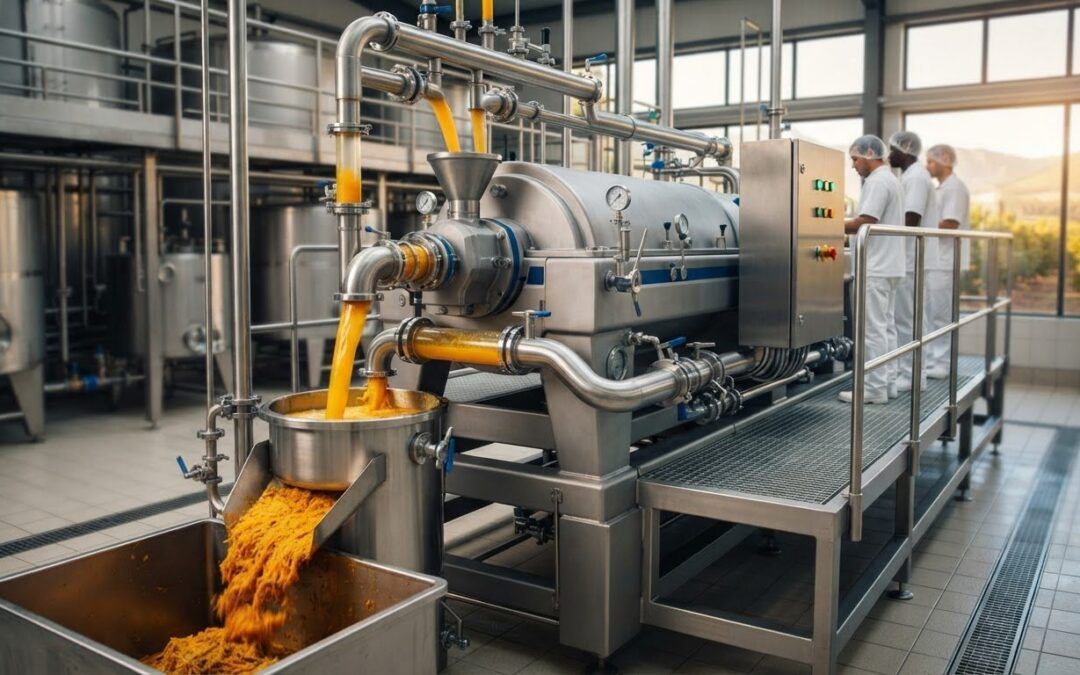
A decanter centrifuge for juice processing functions as a sophisticated, horizontal sedimentation tank that rotates at high speeds. This rotation generates the centrifugal force required to separate heavy fruit solids from the liquid juice almost instantly. By 2026, industry standards have shifted decisively toward this technology because it handles high-solids fruit mashes that would typically blind traditional filter cloths. Modern processors rely on these systems to manage complex enzymatic treatments, where precise maceration is required to release flavours and nutrients without compromising the final texture of the product.
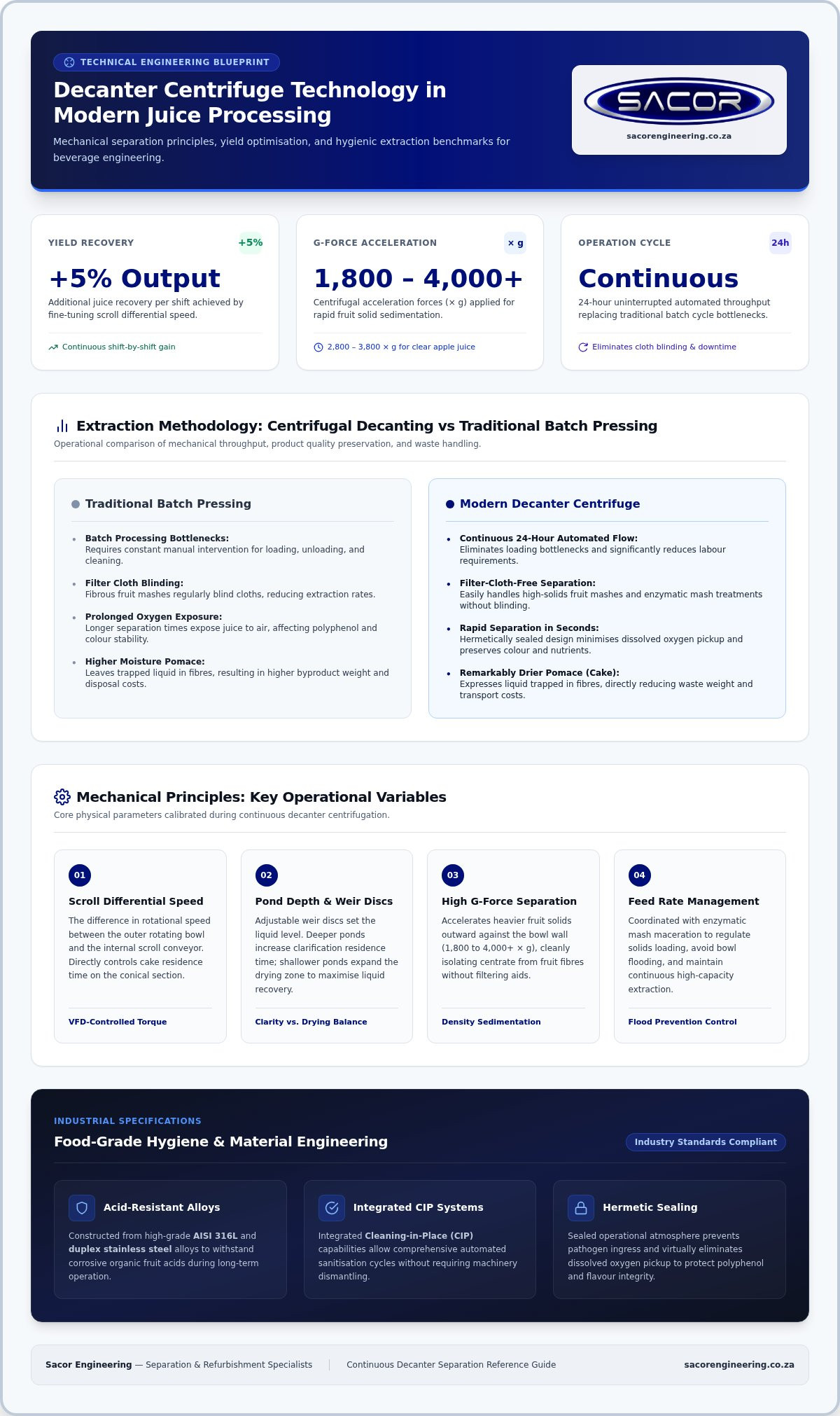
Moving from traditional batch pressing to continuous decanting represents a significant leap in plant throughput. Batch systems often create bottlenecks, requiring constant manual intervention for loading and cleaning. In contrast, a decanter provides a seamless, automated flow that keeps the production line moving 24 hours a day. This transition doesn’t just improve speed; it enhances the sensory profile of the beverage. Because the separation occurs in a matter of seconds, the juice has minimal exposure to oxygen. This preserves the natural colour stability and polyphenol content, ensuring premium juices retain their vibrant appearance and nutritional value throughout their shelf life.
To achieve these results, engineers must master the principles of decanter centrifugation, balancing bowl speed and scroll torque to suit the specific density of the fruit being processed. When these variables are tuned correctly, the result is a clear, high-quality centrate and a remarkably dry cake.
Yield Optimisation and Waste Reduction
Extraction efficiency is the primary driver of profitability in any beverage facility. Decanters are exceptionally effective at processing deciduous and citrus fruits, where pulp consistency can vary between harvests. By applying high G-forces, these machines express liquid that traditional presses often leave trapped within the fruit fibres. Juice yield is the ratio of extracted liquid to total fruit mass. Beyond maximizing the liquid output, the technology produces a pomace with significantly lower moisture content. This drier byproduct reduces the weight and volume of waste, leading to a direct reduction in disposal and transport costs.
Maintaining Food-Grade Hygiene Standards
In the beverage sector, mechanical reliability must be paired with uncompromising hygiene. High-performance decanters are constructed from acid-resistant stainless steel, such as AISI 316L or duplex alloys, to withstand the corrosive nature of fruit acids over long-term operation. Modern centrifugal separators feature integrated Cleaning-in-Place (CIP) capabilities, allowing for comprehensive sanitisation cycles without the need to dismantle the machinery. Hermetically sealed processing environments further protect the product by preventing the ingress of external contaminants and virtually eliminating dissolved oxygen pickup during the extraction phase.
Mechanical Principles: How Decanter Technology Optimises Separation
The mechanical efficiency of a decanter centrifuge for juice processing relies on the precise application of centrifugal force. As the fruit mash enters the rotating bowl, solids with a higher density than the liquid are accelerated outwards against the bowl wall. This process, known as sedimentation, happens at forces typically ranging from 1,800 to over 4,000 × g. Whilst a clear apple juice might require 2,800 to 3,800 × g for optimal clarification, a thicker mango puree demands a more nuanced approach to prevent the loss of valuable pulp. It’s this mechanical precision that allows for the continuous extraction of high-quality centrate without the need for traditional filtering aids.
Differential speed is the critical variable that governs how these separated solids are removed. It represents the difference in rotational speed between the outer bowl and the internal scroll conveyor. By tuning this delta, operators control the residence time of the “cake” on the conical section of the bowl. Adjusting the pond depth via weir discs further refines this balance; a deeper pond increases the liquid’s residence time for superior clarity, whilst a shallower pond extends the drying zone to maximise juice recovery. These adjustments align with standard FAO juice processing unit operations, ensuring that every drop of value is extracted from the raw material.
Precision in these mechanical settings is what separates a standard operation from a high-yield facility. If your machinery isn’t hitting these benchmarks, it’s often a sign that the internal geometry needs recalibration. Our engineering team specialises in providing customised separation solutions that address these specific mechanical demands.
Scroll Design for Fibrous Fruit Mashes
Processing fibrous mashes or high-viscosity purees requires specialised scroll geometry. Unlike standard industrial applications, beverage scrolls must be engineered to prevent “plugging” whilst maintaining a steady discharge of solids. We often utilise tungsten carbide tiles or plasma spray hardfacing on the scroll flights to protect against the abrasive nature of seeds and skins. Precise torque control is essential here; it allows the machine to automatically compensate for fluctuations in feed consistency, ensuring the separation remains stable even during peak harvest periods.
Bowl Geometry and Clarification Efficiency
The ratio of the bowl’s length to its diameter (L/D ratio) determines the volume available for clarification. A longer cylindrical section provides more time for fine particles to settle, which is vital for premium cloudy juices that require a specific “haze” without sediment. Conical sections, on the other hand, are responsible for dewatering the solids. Maintaining mechanical integrity is paramount; even a slight imbalance at high speeds can lead to catastrophic bearing failure. Professional two-plane dynamic balancing ensures the equipment operates smoothly, preventing the vibration-induced downtime that often plagues ageing machinery.
Comparing Extraction Methods: Decanters vs. Traditional Pressing
Deciding between traditional pressing and modern centrifugal extraction is a pivotal choice for any facility manager. Whilst belt presses have been the industry standard for decades, they often struggle with the demands of 2026 production volumes. A decanter centrifuge for juice processing offers a continuous, enclosed system that drastically reduces the physical footprint of the extraction line. For space-constrained plants, replacing a sprawling belt press with a compact centrifuge allows for increased capacity without the need for expensive structural expansions. This shift isn’t just about space; it’s about creating a more streamlined, manageable workflow.
The versatility of decanter technology is another significant advantage. A single unit can be recalibrated to handle various fruit types, from stone fruits to berries, simply by adjusting the scroll differential speed and pond depth. This flexibility is rarely possible with traditional presses, which often require different belt types or mechanical configurations for varying mashes. By using a single, adaptable machine, processors can diversify their product range without investing in multiple sets of hardware.
Efficiency Benchmarks: Decanter vs. Belt Press
When comparing juice quality, turbidity levels are a primary differentiator. Decanters typically achieve a lower solids content in the final product, often reducing the burden on downstream filtration stages. Because the separation happens in seconds, heat-sensitive nutrients and delicate flavour profiles are better preserved compared to the slower, oxygen-exposed environment of a press. Traditional belt presses yield roughly 75% to 85% on the initial press, yet they generate significantly higher wash-water waste. If you’re currently evaluating your options, The Professional Guide to Decanter Centrifuges provides a deeper dive into the technical selection criteria for modern beverage applications.
Total Cost of Ownership (TCO) Analysis
The initial capital expenditure for a centrifuge is often higher than a belt press, yet the operational savings tell a different story. Labour requirements are significantly lower. An automated centrifuge requires minimal supervision, whilst belt presses often demand constant monitoring and manual cleaning of filter fabrics. Additionally, the reduction in waste volume is substantial. By producing a drier pomace, processors save on disposal costs and transport fees. Maintenance cycles also differ. Instead of frequently replacing expensive press cloths, a decanter requires periodic scroll refurbishment to maintain its precision. Rebuilding an existing unit can cost 60% to 70% less than purchasing new machinery, providing a sustainable way to maintain high-performance standards. Over a ten-year cycle, the high-performance decanter typically offers superior value retention and a lower total cost per litre of juice produced.
Operational Best Practices for Maximising Juice Yield
Achieving peak extraction rates requires a methodical approach to both mechanical settings and fruit preparation. The performance of a decanter centrifuge for juice processing is largely determined before the mash even enters the bowl. By following a structured operational framework, processors can ensure consistent clarity whilst minimising the risk of mechanical downtime. Precision at this stage prevents the inconsistent yields that often plague older, less sophisticated systems.
- Step 1: Pre-treatment and Enzymatic Mash Preparation. Effective enzymatic treatment is essential to break down pectin chains. This process reduces the viscosity of the fruit mash, allowing the centrifugal force to separate the liquid from the solids more efficiently.
- Step 2: Calibrating Feed Rates. Operators must balance the feed pump speed with the machine’s capacity. Excessive feed rates can lead to bowl flooding, where solids are carried over into the centrate, whereas a rate that is too low reduces overall plant throughput.
- Step 3: Monitoring Differential Speed. Fruit ripeness varies throughout the season, altering the fibre content and softness of the mash. Adjusting the differential speed ensures the scroll removes solids at the correct rate, maintaining cake dryness even as the raw material changes.
- Step 4: Regular Vibration Analysis. Utilising vibration sensors and bearing temperature telemetry allows for the detection of scroll unbalance or wear before it leads to catastrophic failure.
Clarifying Difficult Fruit Varieties
High-pectin fruits, such as peaches and nectarines, present unique challenges due to their slippery, gelatinous consistency. These mashes often require specific scroll configurations to prevent the solids from slipping back into the pond during discharge. Managing stone fruit processing effectively often involves customised separation solutions that tailor the bowl’s conical angle to the specific friction coefficient of the pulp. For delicate berries, the focus shifts to low-shear extraction to preserve anthocyanins and prevent the release of bitter seed oils, ensuring the flavour profile remains untainted.
Real-Time Performance Monitoring
Modern automation has transformed decanter operation from a manual task into a precision-monitored process. Integrated turbidity sensors can now trigger automatic adjustments to the scroll speed or pond depth, responding instantly to fluctuations in centrate clarity. Consistent feed temperature is equally vital; fluctuations in heat alter the viscosity of the juice, which directly impacts separation efficiency. Industry data indicates that refining scroll differential speeds through real-time monitoring can capture between 2% and 5% additional juice recovery per shift by maintaining optimal retention times. If you are looking to enhance your extraction rates, consult with our engineering experts to audit your current workflow.
Bespoke Separation Solutions and Refurbishment Services
Sacor Engineering views every decanter centrifuge for juice processing as a long-term strategic asset rather than a simple hardware purchase. Our approach centres on a consultative partnership, where we tailor each separation system to the specific rheology of the fruit being processed. We understand that a facility’s needs evolve, and machinery must be adaptable to remain profitable. By providing expert guidance on process optimisation, we help processors move beyond standard configurations to achieve bespoke extraction results that align with their unique production goals.
Sustainability and cost-efficiency are core pillars of our service model. The economic benefits of refurbishing a solid bowl decanter centrifuge are compelling, as a comprehensive rebuild typically costs between 60% and 70% less than purchasing new equipment. Beyond the financial savings, refurbishment significantly reduces procurement lead times. Whilst a new unit might involve a wait of 10 to 14 months, a professional refurbishment is often completed in just 8 to 12 weeks. This allows facilities to restore peak performance with minimal disruption to their seasonal harvest schedules.
As a key partner in South Africa’s national food and beverage infrastructure, we provide the engineering precision required for high-speed industrial separation. Our role extends from initial supply to the continuous support of the machinery that keeps the nation’s juice production lines running efficiently.
Technical Refurbishment of Juice Centrifuges
The refurbishment process is a rigorous engineering undertaking that restores a machine to its original specifications. It begins with an exhaustive strip-down and inspection, followed by dynamic two-plane balancing of both the bowl and the scroll conveyor. We perform complete gearbox overhauls and can upgrade older units with modern control systems and advanced wear protection, such as tungsten carbide hardfacing. For a detailed breakdown of these technical steps, see our guide on Industrial Centrifuge Life Extension.
Custom Engineering for Unique Process Needs
Modern beverage trends require increasingly specialised separation solutions. We design systems for niche applications, including the clarification of kombucha or the extraction of plant-based milks, where traditional methods often fail. In many cases, we integrate disk stack separators into the workflow to provide final polishing and ultra-clarity for premium products. This multi-stage approach ensures that the final beverage meets the highest clarity standards whilst maintaining high-volume throughput. Our national engineering support ensures that these complex systems operate with the reliability that South African processors depend on for their long-term success.
Securing the Future of High-Yield Juice Production
Adopting advanced centrifugal technology is no longer just an operational choice; it’s a strategic necessity for processors aiming to thrive in 2026. By mastering mechanical variables like pond depth and differential speed, facilities can unlock significant yield improvements whilst maintaining the highest hygiene standards. A high-performance decanter centrifuge for juice processing provides the continuous, automated throughput required to meet modern market demands, effectively replacing the bottlenecks associated with traditional belt pressing.
Sacor Engineering stands as a trusted partner in this transformation, offering national South African technical support and specialised expertise in food and beverage processing equipment. Whether you’re looking to install a new system or extend the life of your existing assets through our comprehensive refurbishment services, our team provides the precision engineering your facility deserves. We’re committed to helping you achieve long-term operational excellence through sustainable and cost-effective solutions. Contact Sacor Engineering for a bespoke juice processing separation consultation today and take the first step toward a more efficient, high-clarity production cycle. Your journey toward optimised extraction starts with the right engineering partnership.
Frequently Asked Questions
How does a decanter centrifuge differ from a disk stack separator in juice processing?
A decanter centrifuge is designed to process high-solids fruit mashes, typically handling 20% to 50% solids by volume. It performs the initial extraction to separate juice from the dense pulp. In contrast, a disk stack separator is used for final polishing or ultra-clarification of liquids with low solids content, usually under 1%. Whilst a decanter removes the bulk of the fruit mass, the disk stack targets finer particles to achieve a crystal-clear finish.
Can a decanter centrifuge handle fruit with stones or large seeds?
Large stones and pits must be removed during the maceration stage before the fruit mash enters the centrifuge. Hard objects like peach pits or mango stones can cause catastrophic mechanical damage to the rotating bowl and scroll flights. However, a decanter centrifuge for juice processing can handle smaller seeds and skins if the internal components are fitted with tungsten carbide wear protection. These specialised coatings prevent erosion during high-speed sedimentation of abrasive materials.
What is the typical lifespan of a decanter centrifuge bowl in a beverage plant?
A high-quality stainless steel bowl typically lasts between 15 and 20 years when maintained correctly within a beverage production environment. The lifespan depends heavily on the acidity of the fruit being processed and the consistency of the cleaning cycles. Regular inspections for pitting corrosion and dynamic balancing are essential to prevent premature fatigue. Through professional refurbishment services, the operational life of the bowl can often be extended further, ensuring long-term reliability for the facility.
Is it better to buy a new decanter or refurbish an existing industrial centrifuge?
Refurbishing an existing unit is often the more sustainable and cost-effective choice for many processors. Rebuilding a centrifuge typically costs 60% to 70% less than purchasing new machinery whilst offering significantly shorter lead times. A professional refurbishment restores the machine to its original factory specifications, including balancing and gearbox overhauls. This approach allows plants to upgrade their technology with modern control systems without the capital expenditure and long procurement delays of a new purchase.
How much juice yield increase can I expect when switching from a belt press?
Switching to a decanter centrifuge for juice processing can capture between 2% and 5% additional recovery per shift compared to traditional belt presses. Modern decanters achieve these gains through precise scroll differential control, which maximises cake compaction. Whilst a single-stage decanter yields roughly 70% to 80% extraction, a two-stage counter-current system can reach recovery rates of up to 95%. These improvements directly reduce waste disposal costs by producing a significantly drier pomace byproduct.
What maintenance is required to keep a juice processing centrifuge running efficiently?
Efficient operation requires a combination of daily sanitisation and periodic mechanical audits. Cleaning-in-Place (CIP) cycles are mandatory to prevent pulp buildup and bacterial growth within the bowl. Operators should perform regular lubrication of the main bearings and monitor vibration levels through real-time telemetry. Annual inspections of the scroll flight tips and gearbox oil analysis help identify wear early. This proactive approach prevents the vibration-induced downtime that can disrupt production during the peak harvest season.
Does the decanter centrifuge affect the nutritional value of the juice?
Decanter technology actually helps preserve nutritional value by minimising oxygen exposure. Because the separation occurs within an enclosed, hermetically sealed environment, the juice is protected from enzymatic oxidation that destroys vitamin C and polyphenols. The process is exceptionally fast, taking only seconds to separate the liquid from the solids. This rapid extraction prevents the browning associated with traditional pressing methods, ensuring the final product retains its natural colour, flavour, and antioxidant profile.
What are the cleaning requirements for food-grade centrifugal separators?
Food-grade separators must comply with strict hygienic standards, including the use of NSF H1-registered lubricants and acid-resistant stainless steel. Automated CIP systems are utilised to flush the bowl and scroll with hot water or caustic solutions at high rotational speeds. This creates the necessary turbulence to remove stubborn fruit fibres and pectin residues. Regular validation of these cleaning protocols, such as riboflavin spray tests, ensures the equipment remains free from contaminants and meets international food safety regulations.