
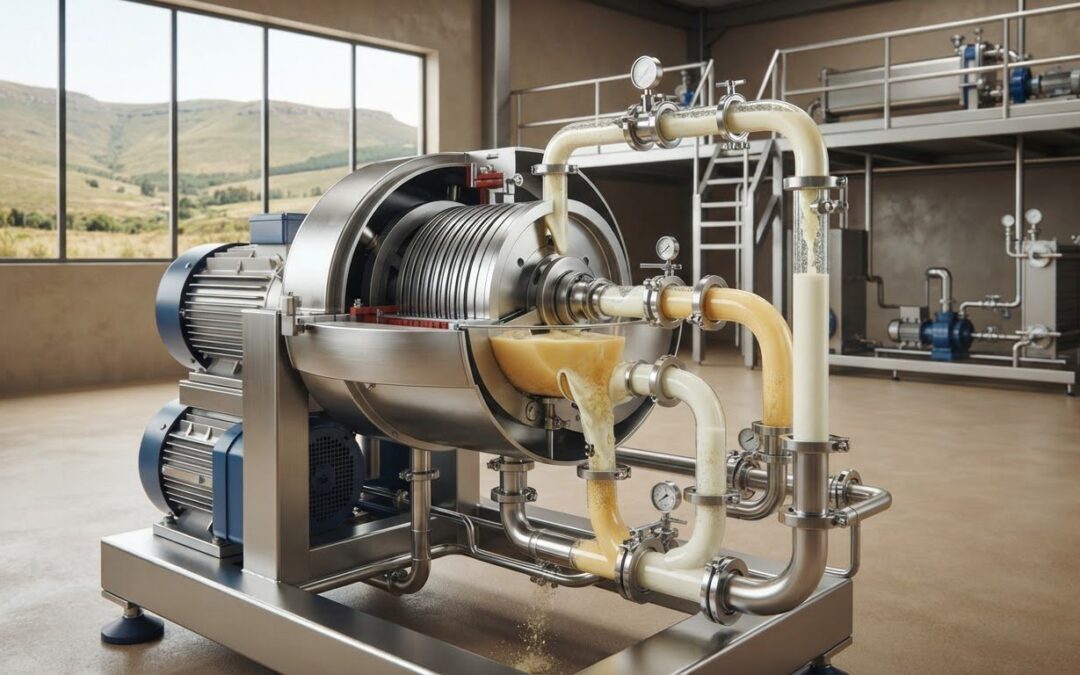
What if the valuable butterfat lost during daily skimming isn’t an unavoidable processing cost, but a mechanical mismatch? Precision dairy separation relies on matching mechanical centrifugal design to raw milk rheology, making the selection of separation technology for dairies one of the most critical decisions in your processing line. When delicate fat globules shear under improper centrifugal forces, product yield and commercial margins suffer immediate setbacks.
You already understand the persistent headaches of unplanned mechanical downtime, rapid component wear, and the intense demands of Clean-in-Place (CIP) cycles, all whilst working to satisfy stringent national food hygiene standards. Discover how industrial centrifugal separation technology maximises dairy yield, streamlines milk fat skimming, and enhances hygienic processing efficiency. By pairing robust mechanical engineering with disciplined maintenance, dairy processors can reliably achieve residual fat levels below 0.05% in skimmed milk whilst protecting equipment longevity. This guide explores the engineering principles, separation configurations, and refurbishment strategies required to establish a dependable, high-yield dairy operation.
Key Takeaways
- Deploying the correct separation technology for dairies ensures dependable skimming performance below 0.05% residual fat whilst safeguarding sensitive butterfat globules against shear damage.
- Continuous centrifugal clarification purges non-dairy solids, somatic cells, and impurities to elevate product purity and streamline downstream thermal processing.
- Balancing bowl geometry and G-force calculations against process temperature fluctuations prevents operational bottlenecks during seasonal raw milk variations.
- Disciplined preventative servicing and precision dynamic bowl balancing mitigate high-speed mechanical wear, preventing catastrophic seal failures and unplanned downtime.
- Partnering with experienced engineering specialists for customised separation solutions and comprehensive machinery refurbishment extends capital equipment lifespan.
Understanding Separation Technology for Dairies: Principles and Core Machinery
Natural sedimentation under gravity takes hours to separate raw milk into cream and skimmed liquid. In high-volume industrial processing, that timeframe is unacceptable. Modern continuous operations rely on robust mechanical acceleration to handle processing volumes that frequently exceed tens of thousands of litres per hour. By deploying high-speed rotation, contemporary separation technology for dairies magnifies gravitational acceleration by several thousand times, isolating butterfat globules, liquid serum, and microscopic solids in seconds.
The core physical driver of this process is the density differential between components. Unhomogenised milk fat has a specific density of roughly 0.93 g/cm³, whereas the surrounding skimmed milk serum sits near 1.036 g/cm³. When subjected to intense centrifugal acceleration, the heavier serum is driven toward the bowl perimeter, displacing the lighter fat globules toward the centre of rotation. Suspended heavy impurities, including somatic cells, dirt, and cellular debris, possess the highest density and collect against the outer interior bowl wall for intermittent discharge. Correct mechanical design maintains continuous hydraulic balance whilst preventing product contamination.
The Mechanics of Centrifugal Force in Milk Processing
Centrifugal fields generated inside an industrial bowl range between 4,000 and 9,000 times gravity (G-force). This intense energy accelerates the movement described by Stokes’ Law, allowing separation that would normally take hours to occur instantaneously. Inside the machine, milk fat globules migrate along inclined intermediate conical plates without rupturing their delicate lipid membranes. Preserving globule integrity is essential; broken globules release free fatty acids that cause rancidity, foaming, and skimming losses.
Centrifugal dairy separation efficiency depends on establishing laminar fluid flow between conical surfaces, enabling rapid particle sedimentation before hydraulic turbulence can disrupt phase boundaries.
Core Machinery: Disk Stack Separators Versus Decanter Centrifuges
Processing streams dictate machinery selection. Modern milk clarification and fat skimming rely heavily on the continuous action of the centrifugal cream separator, configured as an enclosed, self-desludging vertical unit. For multi-phase fluid duties, industrial high speed disk stack separators deliver the tightest clarification tolerances, operating with hundreds of closely spaced conical disks that dramatically shorten particle sedimentation distances.
Decanter centrifuges serve a completely different purpose within dairy processing. Featuring a horizontal rotating bowl equipped with an internal screw conveyor, decanters excel at handling heavy, high-solids feeds. Key operational distinctions include:
- Disk Stack Separators: Dedicated to liquid-liquid-solid separation with feed solids below 2%, delivering precision skimmed milk with residual fat under 0.05% alongside dense cream fractions.
- Decanter Centrifuges: Built for continuous liquid-solid dewatering of high-slurry streams containing up to 20% or more suspended dry matter, such as precipitated casein, curd fines recovery, and lactose crystal harvesting.
Integrating these systems allows processors to extract maximum commercial yield whilst meeting the strictest food-grade hygiene and CIP requirements across every stage of processing.
Primary Applications of Industrial Centrifuges in Modern Dairy Facilities
Centrifugal units serve distinct processing roles across liquid processing halls. Implementing targeted separation technology for dairies allows facilities to split raw streams into high-margin fractions whilst safeguarding finished goods against spoilage and structural breakdown.
Milk Skimming and Fat Standardisation Systems
Skimming systems divide whole milk into residual skimmed milk and concentrated cream. Processors generally deploy warm skimming at approximately 55°C, where lower fluid viscosity allows butterfat globules to separate freely, achieving residual skim fat levels below 0.05%. Cold skimming at 4°C to 10°C reduces pasteurisation thermal loads and preserves native protein structures, though it demands higher centrifugal force and specialised disk designs.
Modern standardisation loops integrate continuous inline density transmitters and mass flow meters. These sensors continuously monitor output channels, modulating cream retargeting valves to hit precise fat specifications in drinking milk or cheese vats without manual intervention.
Raw Milk Clarification and Spore Removal
Centrifugal clarification outperforms traditional depth or bag filters by operating continuously without blinding or pressure drops. The high-speed clarifier bowl continuously flings somatic cells, leucocytes, and farm dirt into a sediment collection space for automatic discharge. This reduces fouling in downstream pasteurisers and homogenisers.
Dedicated bacteria-removing centrifuges, known as bactofuges, target dense heat-resistant bacterial endospores (such as Bacillus cereus and Clostridium tyrobutyricum). Standard pasteurisation temperatures cannot neutralise these spores. By mechanically extracting them prior to processing, dairies eliminate the late-blowing defect in ripening semi-hard and hard cheeses, dramatically curbing batch spoilage and lengthening fluid milk shelf life.
Whey Processing and Curd Fine Recovery
Discharged cheese whey contains valuable residual butterfat and microscopic suspended casein particles. Direct routing into downstream ultrafiltration or reverse osmosis spirals causes rapid membrane blinding. Industrial clarifiers intercept this stream to reclaim the butterfat as whey cream, generating an immediate secondary revenue stream.
Capturing suspended curd fines requires distinct engineering choices. Depending on slurry concentrations and production scales, plant managers assess specific decanter centrifuge selection criteria to implement horizontal scrolling units that continuously dewater heavy curd solids from the whey liquor.
- Clarifier Centrifuges: Extract sub-micron fines and recover residual butterfat prior to whey concentration.
- Industrial Decanters: Process dense curd washings and precipitated casein streams at continuous, high-volume throughputs.
Evaluating your dairy processing line alongside a specialist provider of food and beverage processing equipment helps identify where mechanical separation upgrades deliver immediate yield and operational gains.
Selecting Separation Technology: Operational Criteria and Engineering Considerations
Specifying industrial separation machinery requires balancing raw fluid rheology against daily plant throughput. Dairy processing is fundamentally tied to seasonal herd cycles, causing milk composition and intake volumes to fluctuate across the year. Sizing separation equipment solely on nominal averages leads to processing bottlenecks during seasonal production peaks. Plant engineers must evaluate bowl volume, rotational speed, and operating temperatures alongside biological variability to achieve sustained skimming accuracy.
Assessing Throughput Volumes and Hydraulic Bowl Design
Sizing methodology begins by calculating maximum hourly intake rather than average daily volume. A facility handling 200,000 litres daily over a condensed eight-hour operational window requires machinery rated for at least 25,000 to 30,000 litres per hour, leaving sufficient headroom for continuous hydraulic stabilisation. Bowl geometry also dictates mechanical suitability across distinct process duties.
Whilst disk stack separators leverage immense equivalent clarifying surface area across hundreds of conical plates for fine liquid-liquid separation, decanter centrifuges rely on deep liquid ponds and scrolling mechanics to evacuate dense solids continuously.
Shear Stress Reduction and Gentle Feed Mechanisms
Selecting appropriate separation technology for dairies involves scrutinising feed entry dynamics. Raw milk fat globules are protected by a delicate biological membrane roughly 10 nanometres thick. When subjected to severe shear stress at the bowl inlet, this membrane ruptures, releasing free fatty acids that initiate lipolysis, causing off-flavours and poor frothing behaviour.
- Hollow-Spindle Inlets: Accelerate raw incoming milk gradually from beneath the bowl, bringing fluid up to rotational speed smoothly.
- Soft-Feed Designs: Eliminate destructive turbulence at the feed nozzle, keeping globule structures intact.
- Finished Product Benefits: Undamaged lipid membranes yield premium whipping cream with superior overrun, stable emulsion structures, and enhanced thermal tolerance during downstream packing.
Hygienic Standards and Clean-in-Place Cleanability
Dairy separation machinery must comply with rigorous hygienic frameworks, including 3-A Sanitary Standards and European Hygienic Engineering & Design Group (EHEDG) protocols. Process surfaces must feature smooth, crack-free finishes with Ra values below 0.8 microns to inhibit bacterial adhesion. Integrating certified industrial separation solutions ensures every internal passage remains fully accessible to chemical sanitation regimes.
Cleaning-in-Place (CIP) sequences demand automated cycles of warm water flushes, hot caustic soda (typically 1.5% to 2.0% NaOH at 75°C), and dilute nitric or phosphoric acid rinses. These cycles dissolve tenacious milk stone deposits, denatured whey proteins, and persistent biological biofilms. High-performance mechanical seals and elastomeric gaskets must endure these chemical and thermal shocks daily without blistering or losing sealing pressure, safeguarding production lines against cross-contamination.

Maintenance, Refurbishment, and Operational Safety in Dairy Processing
High-speed rotating machinery operates under intense physical stress. Industrial dairy separators spin bowls weighing several hundred kilograms at speeds reaching 6,000 to 9,000 RPM. Under these conditions, minor imbalances or undetected component fatigue can trigger catastrophic mechanical failures. Maintaining separation technology for dairies requires a structured preventative maintenance schedule and comprehensive refurbishment protocols to protect plant capital and sustain continuous uptime.
Routine Preventative Protocols for High-Speed Bowls
Daily maintenance routines centre on lubricating high-speed drive spindles and verifying the barrier fluid pressure on mechanical seals. Technicians should log operating vibration levels and bearing temperatures across every production shift. Acoustic monitoring sensors detect microscopic spalling in spindle bearings long before heat rises, providing early warning to schedule planned intervention instead of suffering an emergency shutdown.
Sanitary integrity depends on daily verification of the operating water system and the sliding bowl bottom seals. If pneumatic or hydraulic valves stick, partial ejections become irregular, leading to uneven solids distribution and product cross-contamination across processing cycles.
Precision Dynamic Balancing and Bowl Refurbishment
Operating bowls gradually accumulate mineral scale or suffer micro-erosion from abrasive sand particles present in milk intake. Even a minute deviation of a few grams across the bowl diameter generates immense harmonic vibration at operating velocity. This vibration rapidly destroys drive gears, bends spindles, and ruins precision bearings.
Restoring these assemblies requires dedicated workshop servicing. Specialist engineering facilities perform comprehensive non-destructive testing (NDT), including dye penetrant and ultrasonic examinations, to inspect critical stress areas for micro-fractures. Following weld restoration and precision re-machining of seal lands back to original tolerances, technicians execute dynamic multi-plane balancing at full operating speeds. Following proven pathways for industrial centrifuge life extension restores factory balance specifications and adds years of productive service life to existing plant equipment.
Wear Protection and Mechanical Seal Integrity
Processing whey or curd slurries exposes internal components to continuous erosive wear. To prevent metal degradation, critical impact areas receive specialised protection:
- Erosion Deflectors: Replaceable stainless steel or tungsten carbide wear liners shield the solid discharge ports and bowl hoods from high-velocity particle bombardment.
- Sanitary Mechanical Seals: Silicon carbide and carbon seal faces paired with FDA-compliant EPDM or FFKM elastomers resist harsh caustic and acid Clean-in-Place chemicals.
- Mechanical Safety Interlocks: Solenoid-activated cover locks mechanically prevent operators from opening the bowl hood until rotational sensors verify the assembly has come to a total standstill.
If your plant faces rising vibration levels or seal failures, enquire about our centrifuge refurbishment services to restore your equipment to peak mechanical performance.
Partnering for Tailored Dairy Separation Solutions and Plant Performance
Process engineering in modern milk processing facilities rarely allows for off-the-shelf machinery. Variations in milk solid content, plant layouts, and seasonal intake volumes demand bespoke mechanical integration. Selecting the right separation technology for dairies means treating the centrifuge not as an isolated asset, but as the core hydrodynamic driver of the entire processing hall.
Working alongside an engineering partner who understands mechanical separation ensures that equipment matches your precise operational goals. Sacor Engineering acts as a consultative technical partner across South Africa, delivering customised separation solutions designed to maximise butterfat recovery, enhance plant throughput, and maintain uncompromising sanitary compliance.
Customised Engineering for Unique Dairy Applications
Integrating high-speed separation units into existing piping networks presents distinct spatial and fluidic challenges. Retrofitting requires custom skid fabrication, calibrated feed pumps, and precision backpressure control loops to prevent product cavitating upstream of the separator bowl.
- System Synchronisation: Modern automated control panels link bowl ejection cycles directly into the central plant SCADA architecture, providing real-time data on sediment discharge volumes, motor power draw, and bearing temperatures.
- Process Optimisation: Engineering teams tailor disk stack separators and industrial decanter centrifuges specifically to handle unique product characteristics, whether managing viscous cultured buttermilk, high-density casein curds, or clarified whey streams.
- National Technical Support: Partnering with experienced South African centrifuge specialists guarantees direct access to engineering personnel who understand local operational demands, eliminating the severe delays associated with waiting for overseas technicians.
National Refurbishment and Technical Support Capabilities
Procuring brand-new machinery is not always the most viable or cost-effective path for expanding processing capacity. Comprehensive centrifuge refurbishment services offer an attractive alternative, restoring fatigued units to factory-grade operational integrity at a fraction of the capital expenditure of new equipment.
Sacor Engineering provides national support capabilities that cover mechanical overhauls, non-destructive bowl testing, micro-welding, and dynamic high-speed balancing. These services eliminate dangerous harmonic vibrations, replace worn critical seals, and rebuild spindle geometries to precise manufacturer tolerances. Restoring existing machinery prolongs capital equipment lifespan whilst maintaining the exacting hygiene standards required by national dairy regulations.
Whether you require new disk stack separators, robust decanters for curd dewatering, or specialised maintenance on existing assets, establishing a collaborative engineering relationship secures continuous plant reliability. Contact Sacor Engineering today to discuss your separation requirements with our specialist technical team.
Elevate Your Dairy Yield and Operational Reliability
Achieving consistent profitability in dairy processing hinges on mechanical precision. Implementing the correct separation technology for dairies protects sensitive butterfat membranes during high-speed skimming, eliminates heat-resistant bacterial spores, and reliably recovers valuable protein solids from whey streams. Combining tailored equipment selection with disciplined preventative maintenance prevents costly unscheduled breakdowns whilst keeping your plant aligned with rigorous national hygiene standards.
Sacor Engineering provides dedicated national engineering support across South Africa for food and beverage processors. We specialise in the supply of industrial decanter centrifuges and disk stack separators, alongside comprehensive technical refurbishment that restores worn machinery to original manufacturer tolerances. Whether you’re upgrading an existing skimming line or rebuilding critical separation assets, the right engineering partnership protects your operational margins. Consult Sacor Engineering for high-performance dairy separation to optimise your processing efficiency and ensure enduring plant success.
Frequently Asked Questions
What is the primary difference between a milk clarifier and a milk skimmer?
A milk clarifier performs two-phase separation to remove insoluble solid contaminants, whereas a skimmer performs three-phase separation dividing whole milk into cream, skimmed milk, and solid sediment. Clarifiers feature a single liquid outlet and closely spaced disks designed purely for sediment extraction without splitting butterfat. Skimmers utilise distribution holes within the disk stack and dual discharge pumps, enabling continuous density-driven separation of butterfat globules from serum.
Can modern dairy centrifuges effectively operate under cold milk temperatures?
Yes, modern cold milk separators operate effectively at 4°C to 10°C, though they require specific mechanical adaptations. Lower temperatures increase milk viscosity, demanding specialised separation technology for dairies that features larger disk surface areas, gentle soft-feed inlets, and higher G-force generation. While cold separation preserves delicate milk flavour and reduces thermal pasteurisation costs, it typically requires operating at lower hydraulic throughput rates than warm skimming systems to achieve complete skimming efficiency.
How does centrifugal bactofugation improve milk shelf life without chemical additives?
Bactofugation relies on extreme centrifugal force to physically extract high-density bacterial cells and heat-resistant spores from milk. Because bacterial endospores possess a higher specific gravity than surrounding milk serum, a specialised high-speed separator continuously drives them into the sludge space for automatic ejection. This mechanical reduction lowers the initial microbial load significantly, extending consumer shelf life and preventing cheese defects without altering the natural chemical composition or flavour profile of the dairy stream.
Why is Clean-in-Place compatibility critical for industrial dairy centrifuges?
Clean-in-Place (CIP) compatibility is vital because dairy residues quickly form stubborn milk stone deposits and microbial biofilms inside high-speed disk stacks. Fully automated CIP ensures caustic and acid cleaning solutions circulate through every internal passage, disk surface, and seal face without requiring manual bowl disassembly. This thorough chemical sanitation eliminates bacterial harbourage points, complies with national dairy hygiene standards, and avoids the labour costs and mechanical risks associated with daily manual stripping.
How frequently does an industrial dairy disk stack separator require dynamic balancing?
Plant operators should conduct professional dynamic balancing annually or immediately following any major bowl overhaul or noticeable vibration spike. During typical continuous operations, abrasive minerals and thermal cycles cause gradual uneven wear across rotating components. Sacor Engineering recommends routine vibration monitoring during every shift. If harmonic vibration levels exceed ISO vibration velocity limits, technicians must perform multi-plane dynamic balancing to prevent rapid bearing destruction and catastrophic mechanical spindle failure.
What causes butterfat loss during centrifugal whey separation?
Butterfat loss during whey separation typically stems from excessive hydraulic shear, incorrect backpressure settings, or clogged disk channels. When feed pumps or bowl inlets create high fluid turbulence, fragile fat globule membranes rupture, preventing the cream phase from cleanly coalescing. Additionally, failing to match separation technology for dairies to operational whey temperatures increases fluid drag, allowing fine fat droplets to discharge alongside the clarified whey serum instead of the concentrated whey cream stream.
Can decanter centrifuges be used alongside disk stack separators in cheese plants?
Yes, commercial cheese processing lines routinely deploy decanter centrifuges upstream or alongside disk stack separators to optimise yield. Horizontal decanters handle dense slurry streams containing heavy casein fines and coagulated curd particles discharged from cheese vats. Once the decanter extracts the heavy curd solids, a downstream disk stack clarifier treats the remaining liquid whey, stripping out residual microscopic solids and recovering butterfat with precision before membrane filtration.