
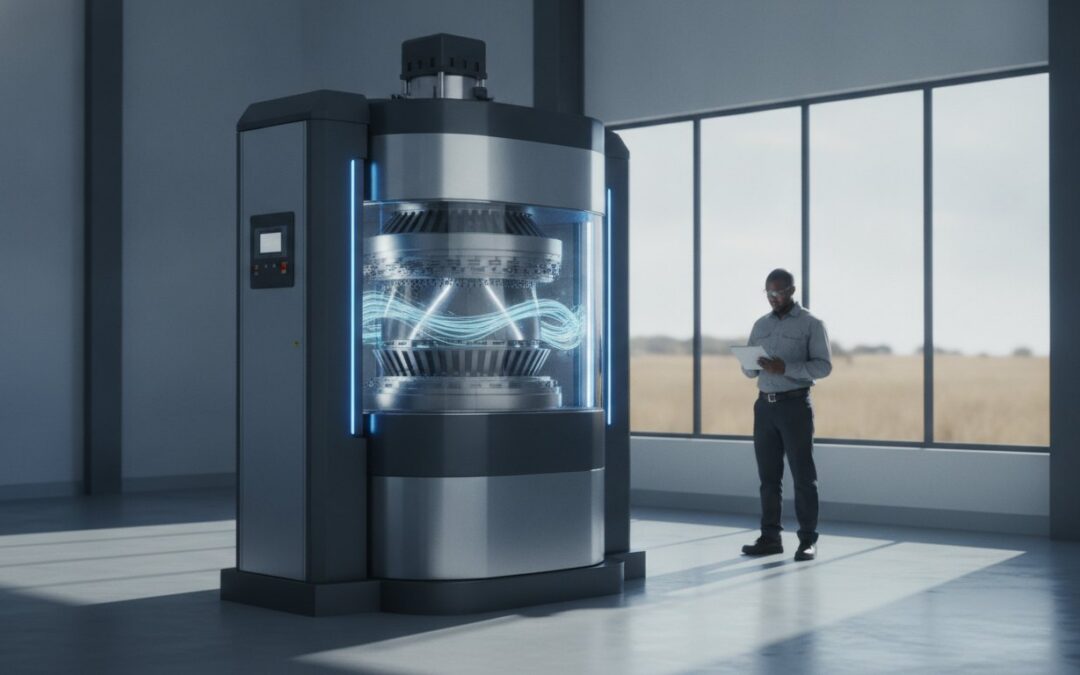
Most industrial operators believe that a centrifuge’s performance is fixed at the point of purchase, yet the difference between a standard setup and a precision-tuned system using high speed disk stack separators can represent a significant swing in operational costs. It’s frustrating to watch high energy bills and frequent downtime erode your margins, especially when your current machinery fails to capture those elusive fine solids. You’re likely all too familiar with the struggle of maintaining sub-micron precision whilst trying to keep a complex process running smoothly.
This guide empowers you to master this technology, moving beyond basic operation to achieve true mechanical excellence. Precision is the goal. We’ll explore the intricate mechanics of these systems, compare essential configurations like purifiers and clarifiers, and provide the specialised maintenance strategies needed to extend your equipment’s lifespan. By the end of this professional guide, you’ll have the technical insight to reduce waste volume and transform your separation process into a model of industrial efficiency.
Key Takeaways
- Understand how high speed disk stack separators use a compressed settling tank design to achieve sub-micron separation precision within a compact industrial footprint.
- Identify the distinct functional roles of clarifiers, purifiers, and concentrators to ensure your equipment configuration aligns with your specific phase separation goals.
- Implement proactive maintenance strategies that address vibration and heat to significantly extend the operational lifespan of high-speed centrifugal machinery.
- Utilise a professional selection framework to determine when to deploy disk stack technology over decanter centrifuges for superior fine clarification and polishing.
- Optimise fluid dynamics through a better understanding of disk spacing and angles to drive industrial sustainability and reduce process waste volumes.
Understanding High Speed Disk Stack Separators
High speed disk stack separators are specialised vertical centrifuges designed to handle the most demanding liquid-liquid and liquid-solid separation challenges. At its core, this technology is a masterpiece of mechanical engineering that transforms a basic physical principle into a high-performance industrial tool. To understand the mechanics, visualise a traditional settling tank that relies on the slow, passive pull of gravity. Now, imagine that entire tank compressed into a high-speed rotating bowl. This transformation allows the machine to achieve in mere seconds what would otherwise take hours or even days in a static environment.
The primary engine of this efficiency is centrifugal force, measured as G-force. By spinning at high velocities, often reaching speeds between 5,000 and 15,000 RPM, these units generate forces that can exceed 12,000G. This immense power accelerates the sedimentation of fine particles, pulling denser materials toward the bowl wall with incredible precision. It’s this force that enables the removal of sub-micron particles that gravity alone could never capture.
The Core Components of a Vertical Separator
- The rotating bowl: This serves as the heart of the machine where separation occurs. It must be perfectly balanced to handle extreme mechanical stress whilst maintaining thousands of revolutions per minute.
- The disk stack: This is a series of conical plates, technically known as a conical plate centrifuge (disc stack separator). These plates dramatically increase the effective settling area within the bowl, allowing for high-capacity separation without a massive equipment footprint.
- The drive system: High-precision motors and gearboxes form the drive system. They’re engineered to maintain exact speed and torque, whilst the addition of industrial slip rings Australia in advanced models facilitates the reliable transfer of power and signals to the rotating assembly.
Centrifugal Force vs. Gravity: The Efficiency Gap
Natural sedimentation is a common bottleneck in industrial workflows. It’s limited by the constant pull of the Earth’s gravity, which is often too weak to isolate fine solids or immiscible liquids quickly. High-speed rotation changes the physics of the process. By amplifying the force applied to every particle, these separators can isolate solids as small as 0.5 to 1 micron. This level of precision is essential for industries requiring high-purity outputs, such as pharmaceutical or dairy processing.
The ability to control this force provides a level of flexibility that gravity cannot match. Whilst gravity is a constant, centrifugal force is a variable we can optimise to revolutionise industrial purity. This shift from passive settling to active, high-speed separation allows for continuous processing, reducing downtime and significantly increasing overall process yield.
Core Configurations: Clarifiers, Purifiers, and Concentrators
Choosing the right setup for high speed disk stack separators isn’t just about capacity; it’s about physics and phase management. These machines operate in three primary functional modes: clarification, purification, and concentration. Selecting the incorrect mode doesn’t just reduce efficiency; it risks significant cross-contamination between phases, potentially ruining high-value batches. Each configuration requires specific internal piping and discharge port arrangements to handle the unique densities of the materials involved.
The internal architecture of the machine changes depending on whether you’re separating two phases or three. This level of mechanical customisation is often documented in technical literature, such as an industrial centrifugation and filtration patent, which highlights how precise fluid dynamics are essential for maintaining phase purity. Matching the hardware to your specific outcome is the first step toward achieving sub-micron precision.
Clarifiers: Liquid-Solid Separation
Clarifiers are the standard choice for two-phase separation where the goal is to remove fine solids from a single liquid. This configuration is widely used for juice clarification, wastewater treatment, and oil polishing. In this setup, the solids are forced to the bowl’s periphery while the clean liquid moves towards the centre for discharge. Designers typically choose between solid-wall and self-cleaning bowls here. Solid-wall bowls require manual cleaning and are best for processes with very low solid content. Self-cleaning bowls feature a sliding piston that automatically ejects accumulated solids, making them ideal for continuous industrial workflows where downtime must be minimised.
Purifiers and Concentrators: Three-Phase Separation
When your process involves two immiscible liquids and a solid phase, you require a three-phase configuration. The distinction between a purifier and a concentrator depends on which liquid phase is the “impurity” being removed. These high speed disk stack separators rely on precise internal components to maintain the “interface” between the two liquids, ensuring neither phase contaminates the other.
- Purifiers: These are configured to remove a small amount of heavy liquid, such as water, from a light liquid, like fuel or lubricating oil.
- Concentrators: These perform the opposite task, removing a small volume of light liquid from a heavy liquid phase.
Maintaining the interface is critical and is usually managed through gravity disks or regulating valves that adjust to the specific densities of the fluids. If you’re unsure which setup fits your current operational goals, consulting with experts on customised separation solutions can help ensure your hardware is perfectly calibrated for the task at hand.
The Engineering Behind Sub-Micron Separation
The efficiency of high speed disk stack separators rests on their ability to manipulate the physical laws governing sedimentation. To achieve sub-micron precision, these machines don’t simply rely on raw power; they utilise a sophisticated internal geometry to increase the “effective settling area” without expanding the machine’s physical footprint. This design allows a compact centrifuge to perform the work of a settling tank several storeys high.
Stokes Law provides the mathematical foundation for this process. It dictates that a particle’s settling velocity is determined by its size, the density difference between the phases, and the viscosity of the carrier liquid. In a standard gravitational field, tiny particles are often held in suspension by Brownian motion, the random thermal movement of molecules. High-speed rotation overcomes this force by amplifying the gravitational constant. By increasing the G-force, we essentially force these elusive particles to follow the rules of sedimentation, isolating them from the liquid phase in seconds.
The Geometry of the Disk Stack
The secret to this rapid isolation lies in the conical disks. These plates are stacked with precise spacing, usually ranging from 0.4 to 2.0 millimetres. This narrow gap reduces the distance a particle must travel before it hits a solid surface. Once a particle contacts a disk, it is considered separated from the main flow. The angle of these disks, typically between 45 and 60 degrees, ensures that captured solids slide down to the bowl periphery rather than clogging the stack. Selecting the right disk thickness and material is vital for mechanical reliability, as these components must withstand intense hydraulic pressures. For those looking to integrate these systems into a broader operational strategy, exploring industrial separation solutions provides the necessary context for matching geometry to specific process needs.
Managing Solids Discharge and Flow Rates
Efficiency is also a matter of how the machine handles the accumulated waste. Depending on the solids concentration, operators must choose between continuous and intermittent discharge. Continuous discharge uses nozzles to bleed off a steady stream of concentrated solids. Self-cleaning separators, however, utilise an intermittent “ejection cycle.” A sliding piston briefly opens ports in the bowl wall to purge solids without stopping the machine. It’s important to remember that throughput and precision are inversely related. Increasing the flow rate reduces the residence time of the fluid within the disk stack, which can compromise the clarity of the final product. Balancing these variables is the hallmark of a well-optimised separation process.

Maximising Operational Life and Efficiency
The most common objection to deploying high speed disk stack separators is the perceived intensity of their maintenance requirements. It’s a valid concern; a machine rotating at 15,000 RPM exists in a state of constant mechanical tension. However, the “maintenance-heavy” reputation often stems from reactive management rather than a lack of mechanical reliability. When these precision instruments are managed through proactive programmes, they provide a level of uptime that matches or exceeds simpler machinery. The key is understanding that vibration, heat, and wear aren’t just byproducts; they’re diagnostic signals that dictate the health of your process.
Unchecked vibration is the primary precursor to catastrophic failure. Even a microscopic imbalance in a high-speed bowl can generate massive centrifugal forces that punish bearings and drive systems. Heat follows closely behind, often indicating lubrication failure or excessive friction within the gearbox. By monitoring these variables, you can shift from expensive, unplanned repairs to a predictable maintenance schedule that preserves your margins and protects your hardware. Ensuring your equipment is correctly positioned from the outset is equally important; following a rigorous industrial centrifuge installation checklist can prevent the structural misalignments that so often become the root cause of chronic vibration issues.
The Critical Role of Centrifuge Refurbishment
Total replacement isn’t always the most strategic or cost-effective path when a separator begins to age. Professional refurbishment offers a viable alternative that can restore a machine to OEM specifications or even improve upon its original design. This process is comprehensive, involving precision bowl balancing, full gearbox overhauls, and the repair of critical wear components such as scrolls or the disk stack itself. A well-executed restoration ensures your equipment remains a high-performing asset for years to come. For a deeper look at these strategies, consult our guide on industrial centrifuge life extension.
Wear Protection and Material Science
In abrasive environments, such as mining or heavy industrial wastewater, material science becomes your first line of defence. High speed disk stack separators operating in these sectors often utilise specialised coatings like tungsten carbide to protect surfaces from erosion. Identifying early signs of wear, such as changes in discharge consistency or increased noise levels, allows for the replacement of wear parts before the underlying structure is compromised. Using high-quality spare parts and gaskets is equally vital. Even a minor seal failure can break the hermetic environment required for sensitive separations, leading to oxidation or product loss. Investing in comprehensive centrifuge refurbishment services ensures that every component, from the smallest gasket to the main bowl, meets the rigorous standards required for industrial excellence.
Industrial Applications and Selection Framework
Selecting the appropriate centrifugal technology requires a deep understanding of your slurry’s specific characteristics. Whilst both decanters and high speed disk stack separators rely on centrifugal force, they serve distinct roles within an industrial circuit. Decanters are the workhorses of the industry, designed to handle high solid concentrations and perform the heavy lifting of primary separation. In contrast, high speed disk stack separators are precision instruments used for polishing, which is the removal of trace solids or the separation of immiscible liquids to achieve extreme clarity. If your process requires sub-micron precision after a primary separation stage, the disk stack is the undisputed choice. For a detailed technical comparison of both technologies, our guide on the decanter centrifuge vs disk stack separator provides a clear decision framework based on G-force capability and feed requirements.
The national industrial landscape demands bespoke engineering to meet diverse challenges. From the abrasive slurries of the mineral sector to the sensitive requirements of beverage production, a one-size-fits-all approach inevitably leads to inefficiency. Success depends on matching the separator’s G-force and disk geometry to the specific density and viscosity of the medium. This consultative approach ensures that the machinery doesn’t just run but thrives within its specific operational context, providing a reliable partnership between technology and process goals.
Mining and Tailings Management
In the mineral processing sector, the recovery of process water and the management of waste are critical for both profitability and environmental compliance. High speed disk stack separators play a vital role in coal tailings recovery, where they isolate fine particles that standard filtration might miss. By integrating these units with larger tailings dewatering equipment, mines can achieve a closed-loop water system. This reduces the reliance on external water sources and ensures that the final discharge meets stringent environmental standards, transforming a waste stream into a recoverable asset whilst protecting the local ecosystem.
Food and Beverage Processing
Consumer standards for clarity and flavour profile drive the demand for advanced separation in the food and beverage industry. Whether it’s clarifying fruit juice or removing yeast from beer, the goal is to maximise yield whilst maintaining hygienic integrity. In the viticulture sector, using a specialised centrifuge for wine clarification allows producers to bypass time-consuming settling processes. These separators are engineered with food-grade materials and hermetic seals to prevent oxidation. This ensures that the final product retains its sensory characteristics whilst achieving the brilliant clarity expected by the market, all whilst streamlining the production timeline.
Optimising Industrial Purity with Precision Engineering
Industrial excellence relies on the delicate balance between high-speed mechanical force and strategic maintenance. By mastering the geometry of the disk stack and selecting the correct configuration for your phase requirements, you transform separation from a bottleneck into a competitive advantage. Whether you’re refining fruit juices or recovering process water in mining tailings, the transition to sub-micron precision is achieved through a deep understanding of fluid dynamics and mechanical reliability.
Maintaining high speed disk stack separators requires more than just routine checks; it demands a partnership with experts who understand the nuances of high-speed rotation. Sacor Engineering provides this expertise through our specialised technical refurbishment centre and bespoke engineering solutions tailored to the most complex separation challenges. With national support across the mining and food sectors, we ensure your machinery operates at peak efficiency whilst extending its total operational lifespan.
Consult with Sacor Engineering for Expert Separation Solutions to revolutionise your industrial workflow and achieve superior process purity today.
Frequently Asked Questions
What is the main difference between a decanter centrifuge and a disk stack separator?
The primary difference lies in the solids-handling capacity and the machine’s orientation. Decanter centrifuges are horizontal units designed for bulk liquid-solid separation with high feed concentrations, often up to 60% solids. In contrast, high speed disk stack separators are vertical machines optimised for “polishing” liquids with low solid content, typically under 1%. Whilst a decanter performs the initial heavy lifting, the disk stack achieves extreme clarity by removing trace impurities. For a comprehensive breakdown of how to choose between these technologies based on your specific process requirements, see our analysis of the decanter centrifuge vs disk stack separator selection criteria.
How often should a high speed disk stack separator be serviced?
Service intervals depend on your specific process and duty cycle, but a minor inspection is generally recommended every 2,000 to 4,000 operating hours. This involves checking seals, gaskets, and lubrication levels. A major overhaul, which includes a complete strip-down and bearing replacement, usually occurs every 8,000 to 12,000 hours. Factors like high fluid temperatures or corrosive elements can accelerate this timeline. Regular vibration monitoring helps identify the need for early intervention.
Can disk stack separators handle abrasive slurries in mining?
Yes, these separators can manage abrasive materials if they’re equipped with specialised wear protection. In mining applications like coal tailings recovery, critical components are often coated with tungsten carbide or other hardened materials to resist erosion. Without these bespoke modifications, high-speed rotation would cause rapid surface degradation. It’s essential to ensure the metallurgy and coatings match the specific abrasivity of your slurry to prevent premature failure and maintain operational efficiency.
What is the minimum particle size a disk stack separator can remove?
High speed disk stack separators are capable of removing particles as small as 0.5 to 1 micron. This level of precision is achieved by the immense G-force generated within the bowl, which overcomes the Brownian motion that keeps fine solids in suspension. Such capability makes the technology indispensable for industries requiring high-purity outputs. It’s particularly vital for the pharmaceutical sector and the final clarification of premium wines, beers, and fruit juices.
What are the signs that my separator bowl needs balancing?
Excessive vibration is the most immediate sign that your separator bowl requires balancing. You might also notice an unusual increase in operating noise or elevated temperatures in the bearing housings. If you ignore these signals, even a minor imbalance can lead to catastrophic mechanical failure due to the extreme centrifugal forces involved. Routine vibration analysis is the most reliable method to detect these imbalances early, allowing for precision balancing at a specialised refurbishment centre.
Is it better to refurbish an old separator or buy a new one?
Refurbishment is often the more strategic and cost-effective choice for established industrial operations. Professional refurbishment services can restore an existing machine to OEM specifications, or even enhance it with modern coatings, at a fraction of the cost of a new unit. This approach is particularly effective for heavy industry fleets where the main structural components remain sound. However, if your process requirements have fundamentally changed, a new, customised solution might be necessary.
How does feed concentration affect the choice of discharge mechanism?
The concentration of solids in your feed determines whether you require a solid-wall, self-cleaning, or nozzle-type bowl. Solid-wall bowls are suitable for very low concentrations where manual cleaning is infrequent. If your process has a higher or variable solids load, a self-cleaning mechanism is essential to purge solids intermittently without stopping the machine. For very high, continuous solids discharge, nozzle separators are used to bleed off a steady stream of concentrated waste.