
Could a 0.5g/t grade be the key to your mine’s longevity in 2026? With South African gold production declining by 32% over the last decade, the industry’s focus has shifted decisively toward the R7.8 billion potential of surface tailings retreatment and advanced gold tailings dewatering solutions South Africa. You’re likely feeling the pressure of the 2025 GISTM compliance deadlines and the stringent machinery safety requirements of the 2026 OHS Amendment Bill. It’s a complex environment where water scarcity and TSF maintenance costs can quickly erode margins.
This guide demonstrates how bespoke mechanical separation empowers operators to meet global safety standards while hitting aggressive production targets. We’ll explore the mechanics of high-performance decanter centrifuges, the economic benefits of local refurbishment, and the engineering strategies needed to maximise water return to your processing plant. By moving away from traditional, high-maintenance equipment toward precision-engineered separation, you can ensure your operation remains both compliant and profitable in an evolving regulatory landscape.
Key Takeaways
- Understand the critical role of mechanical dewatering in maintaining Tailings Storage Facility stability and ensuring full compliance with the latest GISTM safety standards.
- Identify why decanter centrifuges have become the leading gold tailings dewatering solutions South Africa for processing high-volume slurries with a compact operational footprint.
- Compare the performance metrics of centrifugal separation against traditional sedimentation and filter presses to maximise water recovery and plant throughput.
- Discover how strategic refurbishment of centrifuge bowls and scrolls can mitigate the impact of abrasive gold tailings and significantly extend equipment lifespan.
- Learn the importance of bespoke engineering and detailed slurry analysis when integrating advanced separation technology into existing gold processing circuits.
The Evolving Landscape of Gold Tailings Management in South Africa
The gold mining sector in South Africa is undergoing a profound structural transformation. As traditional deep-level reserves become increasingly cost-prohibitive, the industry has pivoted toward the massive inventories of mine tailings that characterise the national landscape. This shift isn’t merely an economic choice; it’s a necessity driven by the R7.8 billion investments currently seen in tailings retreatment projects. To manage these vast volumes safely, high-performance gold tailings dewatering solutions South Africa have moved to the centre of operational strategy.
Effective dewatering is the primary safeguard for Tailings Storage Facility (TSF) stability. By removing the liquid phase from the slurry, engineers can significantly reduce the pore water pressure within the dam structure. This mechanical intervention is critical for preventing liquefaction, a leading cause of catastrophic failures. In 2026, the focus has shifted from simple storage to active waste volume reduction and the recovery of residual minerals from grades as low as 0.5g/t.
Meeting GISTM Standards Through Engineering
Regulatory pressure is at an all-time high. Following the Global Industry Standard on Tailings Management (GISTM), all South African facilities were required to achieve full conformance by August 2025. For operators in 2026, this means that integrated gold tailings dewatering solutions South Africa are no longer optional. They are a mandatory component of risk mitigation. The transition from wet tailings to “dry stack” or filtered tailings is the most effective way to meet these stringent safety ratings. Mechanical dewatering allows for a smaller environmental footprint and a more predictable, stable waste deposit that satisfies both national regulators and international investors.
Water Recovery and Operational Efficiency
Water scarcity remains a persistent threat to plant throughput amongst national mining operations. Every drop of water lost to a TSF represents a direct financial loss and an operational risk. Implementing a closed-loop system through advanced separation allows mines to return up to 90% of process water back to the plant immediately. This reduces the reliance on external water sources and shields the operation from rising utility costs. Beyond simple recovery, the use of precision-engineered equipment enhances the overall separation process efficiency. This ensures that the slurry is processed at the optimal density, which directly correlates to a longer equipment lifespan and reduced maintenance overheads for the entire gold processing circuit.
Mechanical Separation: Why Decanter Centrifuges Lead the Way
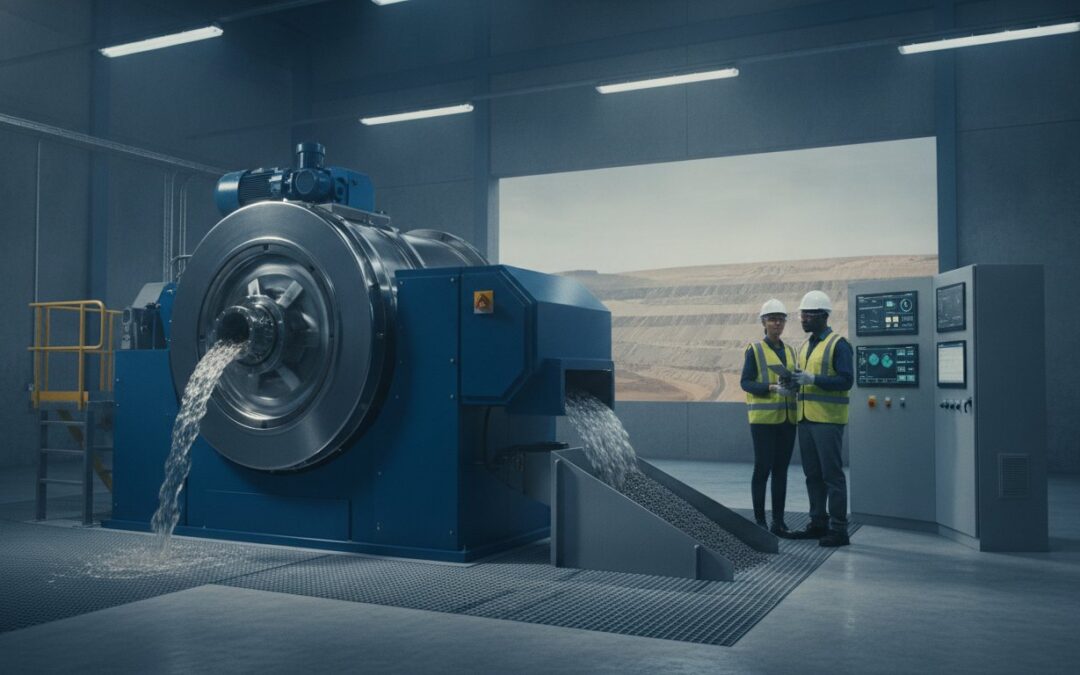
Decanter centrifuges are the primary drivers of modern mineral processing efficiency. Unlike static thickeners that rely on gravity, these units use high-speed mechanical rotation to accelerate the separation of solids from liquids. For gold tailings dewatering solutions South Africa, where fine particle sizes often hinder traditional settling rates, this technology is indispensable. By applying thousands of G-forces within a rotating bowl, the centrifuge achieves a level of separation that gravity alone cannot match.
The mechanics involve a horizontal cylindrical bowl rotating at high speed, coupled with an internal screw conveyor or “scroll”. As the gold tailings slurry enters the unit, the centrifugal force flings the heavier solid particles against the bowl wall. Simultaneously, the scroll rotates at a slightly different speed, continuously pushing the accumulated solids toward the conical end of the bowl for discharge. This rapid acceleration supports an alternative management approach to waste, allowing mines to process vast volumes of slurry in a fraction of the time required by conventional methods.
The Advantages of Solid Bowl Decanters
Solid bowl decanters are engineered for the relentless demands of 24/7 mining environments. They offer several distinct operational benefits over batch-based systems:
- Continuous Operation: These units process slurry without the need for the frequent cleaning cycles or downtime associated with filter presses.
- Feed Flexibility: High-performance decanters automatically adjust to fluctuating feed concentrations, ensuring a consistent output even when the slurry profile changes.
- Superior Cake Dryness: The intense mechanical pressure produces a significantly drier cake than traditional sedimentation, which is vital for achieving GISTM-compliant dry stack storage.
Customisation for Abrasive Slurries
Gold tailings are notoriously abrasive, often containing high concentrations of silica that can quickly erode standard machinery. To combat this, advanced industrial decanter centrifuge technology incorporates specialised wear protection. This includes tungsten carbide tiling and hard-facing on the scroll flights, which act as a shield against the “sandpaper effect” of the ore. Sacor Engineering organises customised separation systems by conducting detailed mineralogical audits to ensure the scroll geometry and wear packages are perfectly matched to the specific slurry profile. If your operation requires a more robust approach to tailings management, you can consult with our technical specialists to explore bespoke equipment configurations.
Comparing Dewatering Technologies for Gold Processing
Selecting the most effective gold tailings dewatering solutions South Africa requires a rigorous comparison of mechanical capabilities against specific site constraints. Whilst traditional thickeners and clarifiers served the industry for decades, their reliance on gravity sedimentation often falls short when managing the ultra-fine particles found in modern gold slurries. These traditional systems require massive surface areas and high volumes of chemical flocculants to achieve even moderate solids concentration, making them increasingly unviable for high-throughput operations or space-constrained sites.
In contrast, high-capacity tailings dewatering equipment like the decanter centrifuge provides a compact, automated alternative. While filter presses can produce a slightly drier cake, they operate on a batch basis and require significant manual intervention or complex automation for cloth cleaning and replacement. Centrifuges offer a continuous process flow, which is essential for maintaining steady-state plant throughput. The operational cost analysis often reveals that whilst centrifuges have higher energy requirements, the reduction in chemical usage and labour costs provides a superior return on investment over the equipment’s lifecycle.
Centrifuges vs. Traditional Filtration
The footprint advantage of centrifugal separation is undeniable. A single decanter unit can often replace several large-scale thickeners or a multi-plate filter press, freeing up valuable site real estate for other processing infrastructure. This is particularly beneficial for brownfield expansions where space is at a premium. Maintenance cycles also differ significantly; whilst filter presses demand frequent cloth changes, centrifuges rely on mechanical components that are better suited for long-term industrial centrifuge life extension through local refurbishment. Modern decanters integrate seamlessly into existing SCADA systems, allowing operators to monitor torque and solids discharge in real-time without manual sampling.
Selecting the Right System for Your Slurry
Your equipment choice must be dictated by a detailed particle size distribution analysis. For high-resolution characterisation of fine mineral structures, scanning electron microscopes distributed by Electron Optics Instruments, LLC provide the level of detail necessary to optimise separation parameters. For slurries with a high percentage of sub-micron particles, standard sedimentation might never achieve the required density for TSF stability. In these instances, gold tailings dewatering solutions South Africa often involve a multi-stage approach. Whilst decanters handle the bulk of the solids, disk stack separators can be deployed for ultra-fine solids recovery or to clarify process water to a high standard. Balancing initial capital expenditure with these long-term operational efficiencies ensures that the chosen system supports both environmental compliance and the mine’s overall profitability.
The abrasive nature of gold ore presents a significant technical challenge for gold tailings dewatering solutions South Africa. High concentrations of silica and fine mineral particles create a persistent “sandpaper effect” that targets the internal components of high-speed separation machinery. Over time, this inevitable wear leads to the erosion of centrifuge bowls and scrolls, which can compromise the precision required for effective moisture removal. Rather than opting for costly total replacements, progressive mining operations are increasingly choosing professional refurbishment as a strategic investment in their existing infrastructure.
This approach doesn’t just repair surface damage; it restores the equipment to its original engineering specifications, often enhancing performance through modern wear-protection upgrades. By extending the operational lifespan of critical assets, mines can stabilise their capital expenditure whilst maintaining the high throughput necessary for 2026 production targets. Professional restoration ensures that the mechanical integrity of the system remains robust enough to handle the rigours of continuous slurry processing, often requiring the integration of high-grade industrial components from specialists like Jealco International, Inc..
Restoring high-speed machinery requires a methodical, engineering-led workflow to ensure long-term reliability. A structured restoration typically follows these essential stages:
- Step 1: Thorough decontamination and technical strip-down. This allows for a complete visual and mechanical assessment of every component, from the gearbox to the main bearings.
- Step 2: Precision non-destructive testing (NDT). Using advanced diagnostic tools, engineers identify micro-cracks or structural fatigue that could lead to catastrophic failure under high G-forces.
- Step 3: Dynamic balancing of bowls. This is critical for ensuring vibration-free operation, which protects the surrounding plant infrastructure and prevents premature bearing wear.
Benefits of Local Technical Support
Relying on international manufacturers for maintenance often results in prohibitive lead times and excessive logistics costs. By utilising national South African engineering centres, operators gain access to specialised centrifuge refurbishment services that are specifically tailored to the demands of local ore bodies. This proximity ensures that critical spare parts for gold tailings dewatering solutions South Africa are available amongst national support networks, reducing unplanned downtime from months to weeks.
Maintaining a local support partnership allows for proactive maintenance schedules that align with your specific plant cycles. If your separation hardware is showing signs of performance degradation or increased vibration, request a technical assessment from our engineering team to secure your dewatering circuit’s future.

Implementing Bespoke Dewatering Systems with Sacor Engineering
Transitioning from theoretical compliance to operational reality requires a partner who understands the nuances of South African mineralogy. Sacor Engineering provides more than just equipment; we deliver integrated gold tailings dewatering solutions South Africa that are built on a foundation of consultative engineering. Our process begins with a rigorous analysis of your specific slurry profile. This ensures that every decanter centrifuge or centrifugal separator is configured to handle the precise particle size and density of your tailings, ensuring long-term reliability in the field.
Integrating these advanced systems into an existing gold processing circuit is a complex mechanical task. It requires a seamless transition that maintains plant throughput whilst enhancing water recovery. Our engineering team works alongside your site personnel to streamline the installation process, ensuring that the new separation technology complements your current workflow. This partnership extends beyond the initial commissioning. We offer long-term technical support and maintenance programmes designed to keep your operation running at peak efficiency, even as your slurry profiles evolve.
Customised Separation for Maximum Recovery
Every mine has a unique mineralogical signature. We customise our hardware by adjusting bowl geometry and scroll speeds to match these specific profiles. This level of precision allows operators to optimise throughput whilst significantly reducing the need for expensive chemical flocculants and excessive energy inputs. By tailoring the wear-protection packages to the specific abrasiveness of your ore, we help you achieve a more stable and predictable dewatering process. Turning mining waste into value-added products becomes a reality when your equipment is perfectly matched to the task. By maximising solids recovery, we help you drive both sustainability and profitability across your entire tailings management strategy.
Your National Partner in Mining Excellence
Reliability is the cornerstone of our service. We’re committed to providing the South African mining sector with innovative separation technology that meets the highest environmental and safety standards. Our national support network ensures that expert guidance is always accessible, helping you navigate the complexities of 2026 regulatory requirements with confidence. We don’t just sell machinery; we offer a partnership aimed at achieving your long-term operational goals. Starting your journey toward a more efficient dewatering circuit is straightforward. We invite you to contact Sacor Engineering for a bespoke dewatering consultation and discover how our engineering expertise can transform your tailings management.
Securing the Future of South African Tailings Management
The transition toward dry-stack tailings and GISTM conformance represents a significant leap forward for the national mining industry. By prioritising high-performance mechanical separation, operators can effectively mitigate the risks of TSF failure whilst reclaiming essential process water. This strategic shift doesn’t just satisfy regulatory pressures; it transforms waste into a manageable resource that supports long-term profitability. Implementing high-efficiency gold tailings dewatering solutions South Africa ensures that your operation remains resilient against water scarcity and rising maintenance costs.
Sacor Engineering provides a comprehensive partnership through innovative separation technology tailored for mining and reliable national South African engineering support. Our ability to provide specialised refurbishment for all major centrifuge brands means your existing infrastructure can be optimised for another decade of service. We don’t just supply hardware; we provide the precision engineering needed to streamline your entire dewatering circuit. Partner with Sacor Engineering for high-performance dewatering solutions and take the first step toward a more sustainable, profitable mining future. Success in 2026 depends on the strength of your engineering partnerships; let’s build that future together.
Frequently Asked Questions
What are the primary benefits of using decanter centrifuges for gold tailings?
Decanter centrifuges offer continuous processing of high-volume slurries with a significantly smaller footprint than traditional thickeners. These units achieve superior solids concentration by applying intense centrifugal force, which is essential for managing fine particles. By automating the discharge process, they reduce labour requirements and minimise the need for chemical flocculants. This technology provides a robust solution for gold tailings dewatering solutions South Africa, ensuring consistent throughput whilst maximising the return of process water.
How does mechanical dewatering improve TSF safety in South Africa?
Mechanical dewatering improves Tailings Storage Facility (TSF) safety by drastically reducing the liquid content within the waste stream. By removing water before deposition, engineers can lower pore water pressure and mitigate the risk of liquefaction or dam failure. This process facilitates the transition to dry-stack storage, which is far more stable than wet slurry deposits. Such technical interventions are critical for meeting the 2025 and 2026 GISTM compliance deadlines across the national mining landscape.
Can existing dewatering equipment be refurbished to meet 2026 standards?
Existing dewatering equipment can certainly be refurbished to meet current 2026 engineering and safety standards. Sacor Engineering specialises in restoring high-speed separation machinery, including the precision balancing and hard-facing required for abrasive gold slurries. This process acts as a strategic alternative to total replacement, extending the operational life of your assets whilst upgrading them with modern wear-protection. Professional refurbishment ensures that older units perform with the same reliability as newly manufactured hardware.
What is the typical moisture content achieved by mining decanters?
Mining decanters typically achieve a moisture content ranging between 15% and 25%, depending on the specific mineralogical profile and particle size distribution. This results in a stackable, solid cake that is suitable for dry deposition or further mineral recovery. Whilst filter presses might reach slightly lower moisture levels, the continuous nature of centrifugal separation ensures a more consistent process flow. This balance of moisture reduction and throughput is ideal for high-volume gold processing operations.
How often should a decanter centrifuge undergo professional balancing?
Professional dynamic balancing should be performed during every major refurbishment or if an increase in operational vibration is detected. High-speed centrifuges operate under intense mechanical stress, so even minor imbalances can lead to structural damage. Regular monitoring of torque and vibration levels helps determine the exact frequency, but a comprehensive technical audit is recommended annually. It’s a proactive approach that protects your plant infrastructure and maintains the precision required for effective separation.
Does Sacor Engineering provide on-site technical support for mining operations?
Sacor Engineering provides comprehensive technical support and maintenance programmes for mining operations across the country. Our national network ensures that expert guidance is available for on-site slurry analysis, equipment commissioning, and troubleshooting. We don’t just supply hardware; we offer a consultative partnership aimed at achieving long-term operational goals. This includes assisting with the integration of gold tailings dewatering solutions South Africa into your existing circuits to ensure seamless performance and minimal downtime.
What are the differences between gold and coal tailings dewatering requirements?
Gold tailings are significantly more abrasive than coal tailings due to high concentrations of silica and hard rock minerals. This requires specialised wear protection, such as tungsten carbide tiling, on centrifuge scrolls and bowls to prevent erosion. Coal processing often focuses on recovering fine coal particles for saleable product, whereas gold dewatering prioritises TSF stability and water recovery. Each mineral requires a bespoke engineering approach to scroll geometry and bowl speed to optimise transport.
How do GISTM regulations affect equipment selection for new mining projects?
GISTM regulations mandate that new mining projects must adopt the highest safety standards, often making mechanical dewatering a non-negotiable requirement. Equipment selection is now driven by the need to achieve specific cake dryness and stability ratings to prevent environmental disasters. Projects must demonstrate a commitment to reducing the footprint of waste and maximising water recycling. This regulatory framework has accelerated the adoption of advanced centrifugal technology over traditional, higher-risk wet storage methods.