
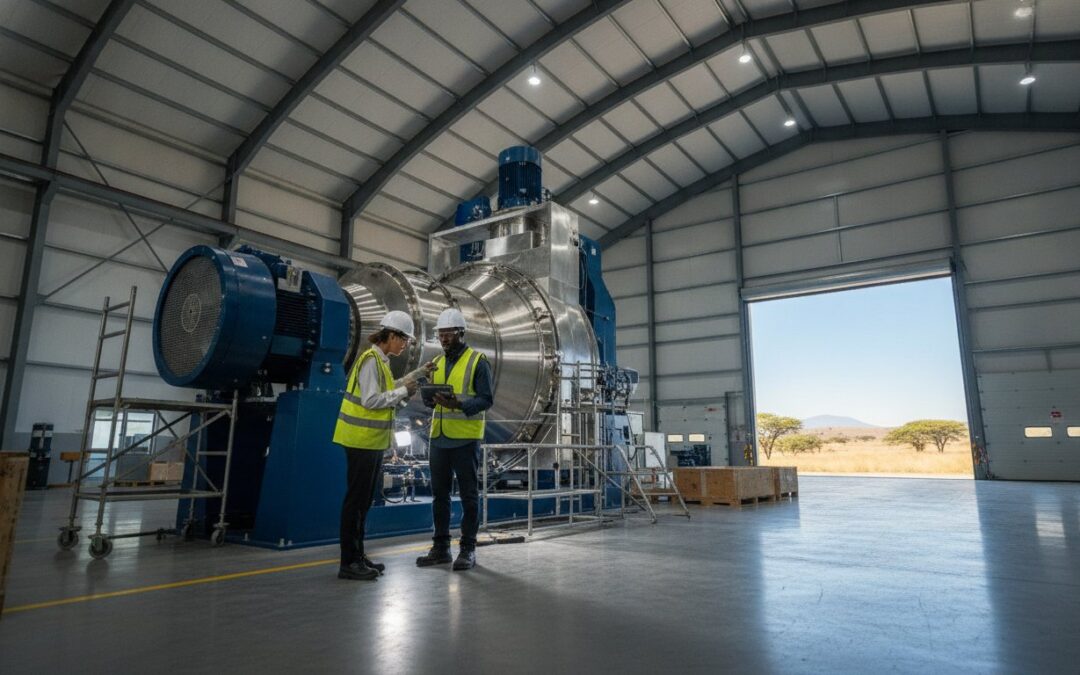
Did you know that the industrial centrifuge installation process can account for up to 40% of your total capital expenditure on a high-capacity mining unit? It’s an investment that demands absolute precision, yet many projects are compromised by structural oversights or utility misalignments. You likely understand the anxiety of managing heavy rotating equipment where a millimetre of deviation can lead to chronic vibration or premature bearing failure. It’s a complex challenge that requires more than just a standard setup; it needs a consultative engineering approach to ensure long-term reliability.
We’ve designed this 2026 engineering checklist to help you master these technical hurdles and optimise your separation efficiency from day one. By following our professional roadmap, you’ll reduce the risk of mechanical downtime and ensure your equipment integrates perfectly into your existing process flow. We’ll explore the critical requirements for site preparation, including foundation integrity, utility specifications, and the latest 2026 standards for operational qualification. This guide serves as your trusted resource for transforming a complex mechanical setup into a seamless operational success.
Key Takeaways
- Conduct a comprehensive site survey to assess logistical constraints and verify floor load-bearing capacities for high-speed centrifugal forces.
- Implement reinforced concrete foundations and advanced vibration dampening systems to safeguard structural integrity and equipment longevity.
- Optimise your industrial centrifuge installation by designing fluid dynamics and process piping that ensure consistent flow whilst preventing discharge blockages.
- Integrate Variable Frequency Drives and robust electrical earthing to achieve precise speed control and protect sensitive control systems from surges.
- Execute a structured commissioning phase with dry and wet-run trials to calibrate separation performance and guarantee a seamless transition into full production.
Pre-Installation Planning and Engineering Assessment
Successful industrial centrifuge installation begins months before the machinery arrives on-site. It’s a precision engineering project that demands a rigorous audit of your existing infrastructure to prevent the significant cost overruns typically associated with poor site preparation. Before committing to a specific layout, you must conduct a comprehensive site survey that accounts for the unique logistical constraints found in South African industrial zones. This includes verifying that heavy lifting equipment, such as mobile cranes or specialised forklifts, can navigate internal access roads and enter the facility without compromising structural integrity.
A fundamental understanding of What is a Centrifuge? reveals why these machines require such intensive site planning. Because they operate at high rotational speeds to achieve phase separation, they generate significant dynamic loads that differ greatly from static weight. You’ll need to evaluate your floor’s load-bearing capacity against these forces to prevent structural fatigue or catastrophic foundation failure over time. Reviewing the technical specifications for high speed disk stack separators before arrival ensures your site is ready for the high G-forces these units produce.
Site Survey and Logistical Coordination
Organising the delivery sequence is a critical step to avoid equipment damage during offloading. You’ll need to establish a secure, level storage area for components if the installation doesn’t happen immediately. In many local mining or food processing plants, space is at a premium; identifying clear access points for cranes is essential. All site safety protocols must align with national engineering standards to ensure that the lifting and positioning phase doesn’t endanger personnel or existing assets.
Environmental and Spatial Requirements
High-precision equipment requires a controlled environment to maintain peak performance. You should define a specific ambient temperature range to protect sensitive control systems and Variable Frequency Drives from overheating. Adequate ventilation is equally vital to manage process vapours and the heat generated by continuous motor operation. Finally, ensure you’ve planned for generous clearances around the unit. Operators need safe access for routine maintenance, and your technical team will require sufficient space for future refurbishments or part replacements. Proper planning ensures that your industrial centrifuge installation integrates seamlessly into your workflow without creating maintenance bottlenecks later.
Structural Foundations and Mechanical Positioning
The physical interface between your machinery and the facility floor is the most common failure point in a poorly executed industrial centrifuge installation. Unlike static plant equipment, high-speed separators generate complex dynamic loads that can compromise the structural integrity of your building if not properly managed. You must view the foundation as an active engineering component rather than a simple concrete base. This requires a transition from general construction practices to precision mechanical engineering, ensuring that every millimetre of positioning aligns with the equipment’s rotational axis.
When integrating refurbished components into a new structural layout, you face additional variables. Refurbished units often require bespoke mounting configurations to account for historical wear or updated motor specifications. If you are utilising professional centrifuge refurbishment services, it’s vital to coordinate the structural design with the refurbishment team to ensure the mechanical interface remains seamless and the unit’s longevity is maximised.
Foundation Engineering for High-Speed Separation
Designing a reinforced concrete foundation for decanter centrifuges involves calculating both static and dynamic load factors. You need to account for the peak forces generated during emergency stops and full-bowl starts, which can exceed the static weight by several magnitudes. High-tensile anchoring bolts, secured with high-performance chemical resins, are essential to maintain a rigid connection under continuous stress. A substantial foundation mass acts as a critical dampening agent by ensuring the natural frequency of the structure remains well below the operational frequency of the machine to prevent destructive harmonic resonance.
Vibration Isolation and Dampening Strategies
To protect your facility from structural fatigue, you must implement advanced vibration dampening systems. Choosing between high-deflection spring mounts and heavy-duty elastomeric dampers depends on your specific machinery’s rotational speed and the sensitivity of nearby electronics. The foundation block should ideally be structurally independent from the surrounding factory floor, separated by an expansion joint or isolation gap to prevent vibration migration. During the first dry-run phase, you’ll need to monitor initial vibration levels using seismic sensors to verify that the isolation strategy is performing as intended. Precision levelling is equally critical here; even a minor tilt can lead to uneven bowl loading, accelerated bearing wear, and chronic imbalance issues that shorten the equipment’s operational life.

Fluid Dynamics and Process Piping Integration
The efficiency of an industrial centrifuge installation depends heavily on the precision of the surrounding fluid architecture. Whilst the mechanical unit provides the centrifugal force, the piping network governs the consistency of the separation process. You must design feed lines that maintain steady flow and pressure, as even minor fluctuations can disrupt the internal hydraulic balance and compromise the clarity of your discharge. Selecting appropriate materials is equally vital. Food-grade applications require 316L stainless steel with sanitary welds, whereas mining tailings dewatering demands abrasion-resistant alloys or rubber-lined pipes to withstand high-velocity solids.
Understanding the decanter centrifuge vs disk stack separator piping nuances is a critical step in the engineering phase. Decanters typically handle high-solids concentrations, requiring wider-bore sludge discharge routes to prevent blockages. In contrast, disk stack separators often deal with liquid-liquid or liquid-fine solid separation, where back-pressure control on the light-phase discharge is essential for maintaining the interface position within the bowl. Each configuration requires a bespoke approach to valve selection and pipe routing to ensure the system operates within its designed performance envelope.
Feed and Discharge Line Optimisation
To protect your piping from the mechanical energy of the machine, you should install flexible connectors at the centrifuge inlets and outlets. These components prevent the transfer of residual vibration, which can lead to weld fatigue or pipe support failure over time. For high-solids applications like tailings dewatering, you should prioritise gravity-assisted discharge routes. Straight, steeply angled discharge chutes minimise the risk of “plugging” that often occurs with viscous materials. We also recommend implementing sampling ports on both the feed and discharge lines to allow for real-time process monitoring and rapid adjustment of separation parameters.
Utility Connections and Auxiliary Systems
Modern separation systems rely on a suite of auxiliary services to maintain peak performance. If you’re operating in the beverage or food sectors, your installation must include dedicated Clean-in-Place (CIP) lines to ensure hygienic processing. For mining and wastewater applications, setting up automated polymer dosing stations is often necessary to flocculate fine particles and enhance dewatering efficiency. You must also plan for secondary utilities, including cooling water for high-load gearboxes and a clean, dry compressed air supply for pneumatic control valves. In remote or large-scale sites, integrating bulk storage solutions from Liquimech can ensure that your auxiliary fuel and liquid requirements are met with industrial-grade reliability. Coordinating these connections during the initial industrial centrifuge installation phase prevents the need for costly retrofits once the plant is operational.
The electrical phase of an industrial centrifuge installation represents the transition from mechanical assembly to operational intelligence. Modern separation technology relies on sophisticated control architectures to manage high-speed rotation safely and efficiently. You must ensure that your facility’s power grid can support the specific requirements of heavy-duty motors, which often experience significant current spikes during the initial start-up phase. Robust earthing and surge protection are non-negotiable, particularly in industrial environments where electrical noise from nearby machinery can interfere with sensitive digital sensors and control logic.
Integrating your centrifuge with existing SCADA or PLC systems allows for centralised oversight and data-driven decision-making. This connectivity ensures that the separation process doesn’t operate in a silo but remains synchronised with upstream feed pumps and downstream storage levels. If you require assistance with complex system integration, our team at Sacor Engineering provides the technical expertise needed to align your new equipment with your plant’s digital infrastructure.
VFD and Motor Control Configuration
Installing Variable Frequency Drives (VFDs) is essential for achieving precise speed control and protecting the mechanical longevity of the unit. You’ll need to programme specific ramp-up and ramp-down times to prevent excessive torque on the gearbox and drive belts during acceleration. It’s equally vital to size all electrical cabling to handle peak starting currents, even when utilizing soft-start protocols. By modulating motor speed to match real-time process requirements, VFDs revolutionise energy consumption in separation processes, significantly reducing operational overheads.
Automation and Remote Monitoring
Modern industrial centrifuge installation projects now prioritise proactive maintenance through integrated sensor networks. You should configure high-precision vibration and temperature sensors, which can be integrated with advanced IoT solutions from CAPTEMP, that feed directly into the control system, triggering automated alerts or shutdowns if parameters exceed safe limits. Establishing secure data links for remote technical support allows for rapid troubleshooting without the need for an on-site visit. During the commissioning phase, you must test the integration of automated sludge level detectors to ensure the system can adjust discharge cycles based on real-time solids concentration. This level of automation reduces the burden on your operators and ensures consistent output quality even as feed characteristics fluctuate.
Finalising the electrical setup involves rigorous testing of safety interlocks and emergency stop sequences. These systems must be hard-wired to ensure they function independently of the software logic, providing a fail-safe mechanism to protect both personnel and the machine. Once the control sequences are verified, the equipment is ready for the final commissioning stages of the engineering checklist.
The final stage of an industrial centrifuge installation is where engineering theory meets operational reality. This phase is critical for validating the precision of the previous structural and electrical work, ensuring that the machine operates within its designed safety margins. You shouldn’t rush the transition to full production; instead, a methodical commissioning sequence allows you to identify and rectify minor misalignments before they escalate into costly mechanical failures. This process begins with a rigorous dry-run test to verify that the electrical logic, safety interlocks, and rotational direction are all correct without the presence of process fluids.
Once the mechanical integrity is confirmed, you’ll proceed to wet-run trials using your specific process fluid. This step is essential to calibrate the separation performance, adjusting weir settings or bowl speeds to achieve the desired clarity and cake dryness. Because these units represent a significant capital investment, establishing a long-term industrial centrifuge life extension strategy during handover is vital. By documenting baseline performance now, you create a benchmark that helps your team recognise when the equipment requires professional refurbishment to maintain its efficiency over the coming decades. For ageing assets that fall short of modern performance benchmarks, exploring industrial centrifuge modernization services can provide a cost-effective pathway to restoring and exceeding original separation efficiency without full equipment replacement.
The Commissioning Sequence
During the commissioning phase, you must monitor bowl balancing and bearing temperatures whilst the unit operates under full load. Any deviation from the manufacturer’s thermal specifications can indicate lubrication issues or foundation resonance that wasn’t apparent during the dry run. You should also verify the accuracy of all control system feedback loops, ensuring that vibration sensors and flow meters provide reliable data to the SCADA interface. Documenting these baseline performance metrics provides a “birth certificate” for the machine, which is an invaluable resource for future troubleshooting and centrifuge performance optimisation and predictive maintenance schedules.
Safety Protocols and Operator Training
A successful handover relies on the competence of your site personnel. You must conduct thorough training sessions that cover both safe operation and routine maintenance tasks, such as grease cycles and seal inspections. Reviewing the operation manual with the maintenance team ensures that everyone understands the specific safety protocols required for high-speed rotating equipment. Finally, your industrial centrifuge installation should conclude with a comprehensive installation report. This document should include a formal schedule for periodic professional refurbishment and a clear list of critical spare parts to keep on-site. This structured approach ensures that the partnership between the engineering team and the plant operators remains focused on long-term operational excellence and safety.
Securing Long-Term Performance through Engineering Precision
Mastering a successful industrial centrifuge installation involves far more than physical positioning; it’s a multi-disciplinary effort that integrates structural stability with advanced automation. You now have a clear roadmap for managing dynamic loads, optimising fluid pathways, and configuring the electrical logic necessary for continuous operation. These steps don’t just reduce the risk of immediate mechanical failure; they establish the baseline for a decades-long service life and consistent separation performance across your facility.
Sacor Engineering brings decades of specialised experience to the South African mining and food sectors, offering expertise in both new equipment supply and professional mechanical refurbishment. Our commitment to national technical support and rapid spare parts availability ensures your facility maintains peak productivity whilst adhering to the highest safety standards. Consult Sacor Engineering for a professional site assessment today to align your project with global engineering excellence. We look forward to partnering with you to transform your separation workflows into a model of dependable industrial efficiency.
Frequently Asked Questions
How long does a typical industrial centrifuge installation take?
A typical industrial centrifuge installation generally requires between two and four weeks for on-site mechanical and electrical assembly. However, the total project timeline often extends over several months when you include pre-installation engineering assessments and structural foundation curing. Factors such as site accessibility and the complexity of your existing process flow integration will influence the final schedule. Ensuring that all utilities and foundations are ready before the equipment arrives is the most effective way to prevent delays.
Do I need a special foundation for a refurbished decanter centrifuge?
Yes, a refurbished decanter centrifuge requires the same rigorous foundation engineering as a brand-new unit. Because these machines operate at high rotational speeds, they generate significant dynamic loads that must be absorbed by a reinforced concrete base. If you’re utilising our refurbishment services, we’ll provide the specific technical data needed to ensure your foundation mass is sufficient to prevent harmonic resonance. Neglecting this step can lead to chronic vibration issues regardless of the machine’s internal condition.
What are the most common mistakes during centrifuge piping installation?
The most frequent error is installing rigid piping without flexible connectors, which allows mechanical vibrations to travel through the entire plant. This often leads to weld fatigue and eventual leaks. Another common mistake involves inadequate sludge discharge routing; tailings dewatering lines must be steeply angled and gravity-assisted to prevent viscous blockages. Omitting sampling ports is also a significant oversight, as it prevents your team from performing real-time process monitoring and performance calibration during the commissioning phase.
Can I install a centrifuge outdoors in South African conditions?
While some rugged tailings dewatering equipment can operate in partially sheltered areas, we don’t recommend a completely exposed industrial centrifuge installation in South African conditions. Extreme ambient temperatures, dust ingress, and seasonal rainfall can compromise sensitive control systems and accelerate bearing wear. If outdoor placement is unavoidable, you’ll need to invest in a bespoke enclosure with dedicated ventilation and climate control. This protects your capital investment and ensures the longevity of the electrical infrastructure and mechanical components.
What utilities are essential for a disk stack separator installation?
A disk stack separator installation requires a robust suite of utilities to function at peak efficiency. You’ll need a stable electrical supply for the high-speed motor, alongside clean, dry compressed air for pneumatic control valves. Cooling water is essential for managing gearbox temperatures during continuous operation. In food and beverage applications, dedicated Clean-in-Place (CIP) lines are mandatory for hygienic processing. Proper planning for these connections during the engineering phase prevents costly retrofits once the machine is positioned.
How often should vibration sensors be calibrated after installation?
You should calibrate vibration sensors immediately during the commissioning phase to establish a baseline for your specific site conditions. After this initial setup, we recommend a calibration check every six to twelve months as part of your routine maintenance schedule. Regular verification ensures that your proactive monitoring systems remain accurate, allowing you to detect minor imbalances before they lead to mechanical failure. This data is critical for determining when a unit requires professional refurbishment or high-precision balancing.
Is professional commissioning mandatory for warranty purposes?
Professional commissioning is almost always mandatory to validate your warranty and ensure operational safety. This process involves a formal verification that the equipment is installed according to exact manufacturer specifications and South African engineering standards. It provides documented proof that the machine operates within its designed parameters under both dry and wet-run conditions. Skipping this step risks your insurance coverage and increases the likelihood of catastrophic failure during the first few months of production when loads are peak.
What is the role of a Variable Frequency Drive in installation?
The Variable Frequency Drive (VFD) is the primary tool for managing the immense torque required during the start-up of a centrifuge. It allows for controlled ramp-up and ramp-down times, which protects the internal gearbox and drive belts from excessive stress. Beyond mechanical protection, VFDs enable you to fine-tune the bowl speed to match fluctuating feed characteristics. This level of control is essential for centrifuge performance optimization and reducing the overall energy footprint of your industrial plant.